Since we moved to Oklahoma, caring friends have warned us about the
sweltering summer heat. As native Texans, we too know heat, where consecutive days of 100-plus degrees are common. Yet all this talk prompted some exploration into an oft-heard phrase — the dog days of summer — and how best to protect our pups from, well … sweating like pigs.
Dog days traditionally are the days between July 3 and August 11, when the weather is particularly hot. The term itself comes from astronomy and refers to the days when the Dog Star, known as Sirius, appears in the sky shortly before the sun rises. Ancient Greeks, Egyptians, and Romans believed the rising of the star in tandem with the sun caused scorching temperatures.
That isn’t true, as noted in the Farmers’ Almanac. Although July and August typically have the hottest days of the year, the heat is not from Sirius, despite its brightness, but instead simply from the earth’s tilt toward the sun during those days.
Finding Sirius in the Night Sky
Sirius shines blue-white and is the brightest star seen from earth; only the moon, Jupiter, and Venus are brighter. In Greek mythology, Sirius was the faithful dog of the god Orion, a great hunter. The Orion constellation is best recognized by three stars that appear close together in a short, straight line known as Orion’s belt. Follow that line south to see the brightest star, Sirius. As the anchor point of the constellation Canis Major, or “big dog,” Sirius marks the collar in the outline of the canine and is known as the Dog Star.
Staying Cool
The tips below focus on comfort and safety for your canine friend when the Dog Star is high.
New summer haircut? Maybe not. Many dog breeds are double-coated, which means they have two layers of fur — a sleek, sometimes rough topcoat and a soft, fuzzy undercoat. The two layers work together to keep animals warm in winter and cool in summer.
“Dogs don’t sweat like people, and the undercoat acts as their thermostat,” said Toney Butts, owner of Southpaws Grooming. “Shaving the layers too close to the skin takes away their ability to regulate body temperature and puts them at risk for sunburn. We encourage thorough deshedding in the spring and early summer, before the heat dome rises over Oklahoma. It’s typically two or three treatments about six to eight weeks apart that aid the shedding of old fur.”
Water play. Remember how refreshing it is to run through a sprinkler when you’re hot? How about giving your dog that same joy? Whether you pick up a light oscillating sprinkler from the home and garden store or opt for one of the playmats or inflatable sprinklers designed specifically for pets, you will have a variety of styles to choose from.
Some of them spray water continuously, enabling pets (and people) to run in and out. Bigger dogs might enjoy putting paw to the pedal with a step-on unit. With a little training, it can be both a fountain for fresh drinking water and a self-activated toy. As with any water play, watch your dog to make sure he’s not swallowing water into his airway.
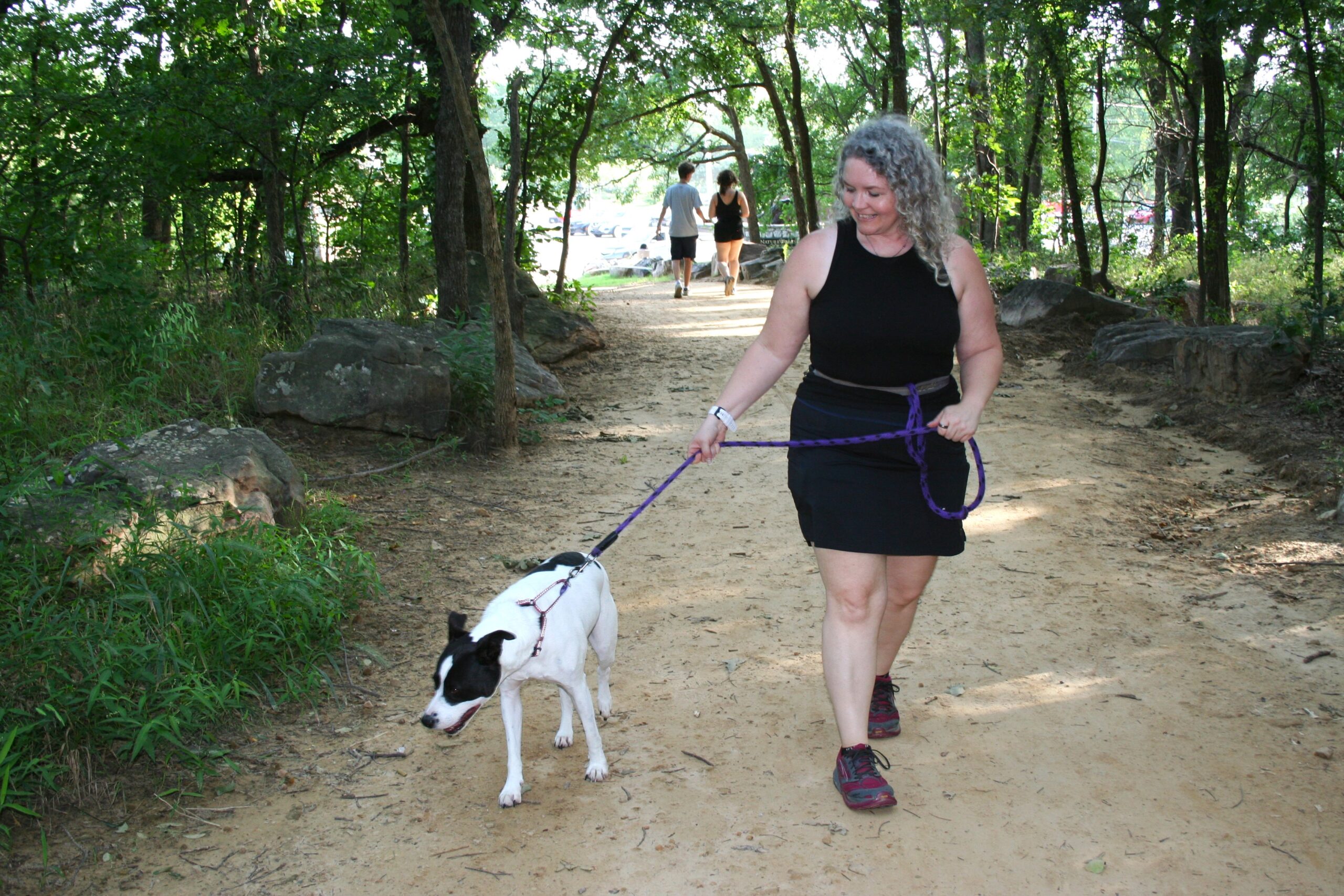
Paw protection. One of the most common risks in the dog days of summer is burned paws. Asphalt retains heat for several hours and can be 40 to 60 degrees hotter than the air surrounding it. So an evening walk when it’s still 80 degrees amounts to 120 degrees or more on your dog’s paws. To keep your pup protected, avoid outings during the heat of the day and aim for grass or dirt paths.
“If you see that their foot pads are dry or cracked, the paw balm you use in the winter can bring moisture and relief in the hot summer,” said Channery White of All Fur Paws Pet Health Market. “I apply a thin layer of balm on my dogs’ paws before we go walking and, if needed, another thin layer when we get back.”
No dog ever said, “Come see my great shoe collection.” However, booties can help protect your pup’s foot pads from hot pavement or chemically treated lawns. “Dogs will resist wearing shoes initially because it’s not natural,” said Jacob Morgan, who works in a retail pet-supply store. “But if you feel it’s in their best interest based on the terrain they’re traveling, try different styles and help them adjust in phases, such as gradually extending the number of minutes they
wear the shoes. Check the fit to accommodate long nails and make sure the shoe cuff doesn’t rub against the dewclaw, which will be uncomfortable and could hurt. Also recognize that some dogs might never adjust.”
Chill time. After the outing, White added, dogs often like to chill on a cooling mat or cot. Some mats have sophisticated construction and might resemble your own memory-foam mattress. Other options include a pressure-activated gel that starts to cool as soon as your dog lies on it and continues for several hours. A mesh cot elevated a few inches off the ground allows air to circulate underneath and around. You can also wet the mat for additional cooling or easy cleanup.
Tasty treat. Finally, check out farmers’ markets — with Fido, of course — and pick up fixings to make dog-friendly ice cream. For example, https://www.Rover. com has recipes for watermelon mint, cantaloupe, pumpkin, or peanut butter and banana. There are also low-fat yogurt and dairy-free options.
Remember that human ice cream is not good for pets, especially because dogs might be lactose intolerant or allergic to dairy products. If you do spoon up a pet version, know that a little goes a long way to help ensure a healthy weight and guard against toxic agents such as chocolate, grapes, and the artificial sweetener xylitol.