by KAYCEE CHANCE | Photos courtesy of OSU-OKC
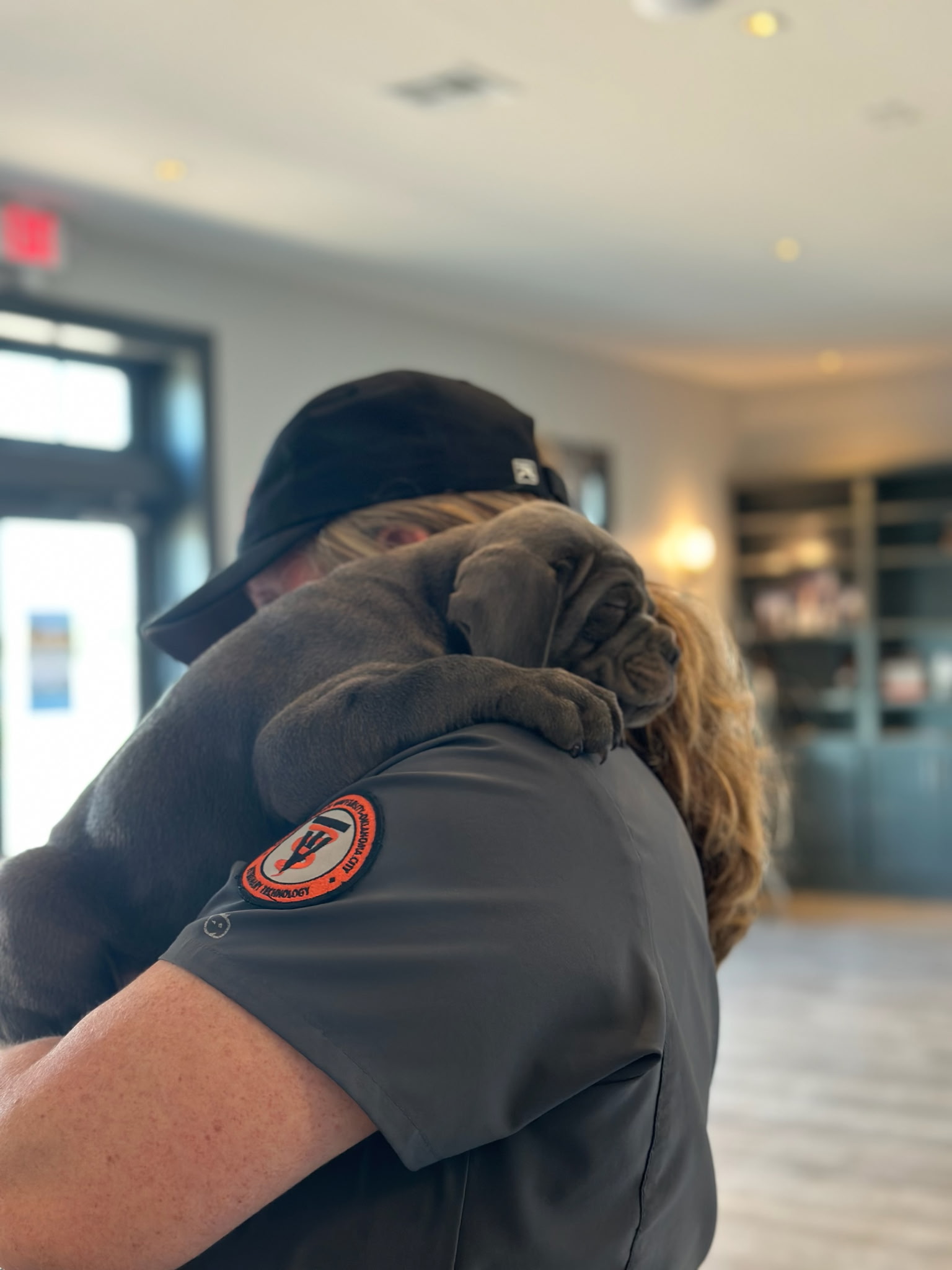
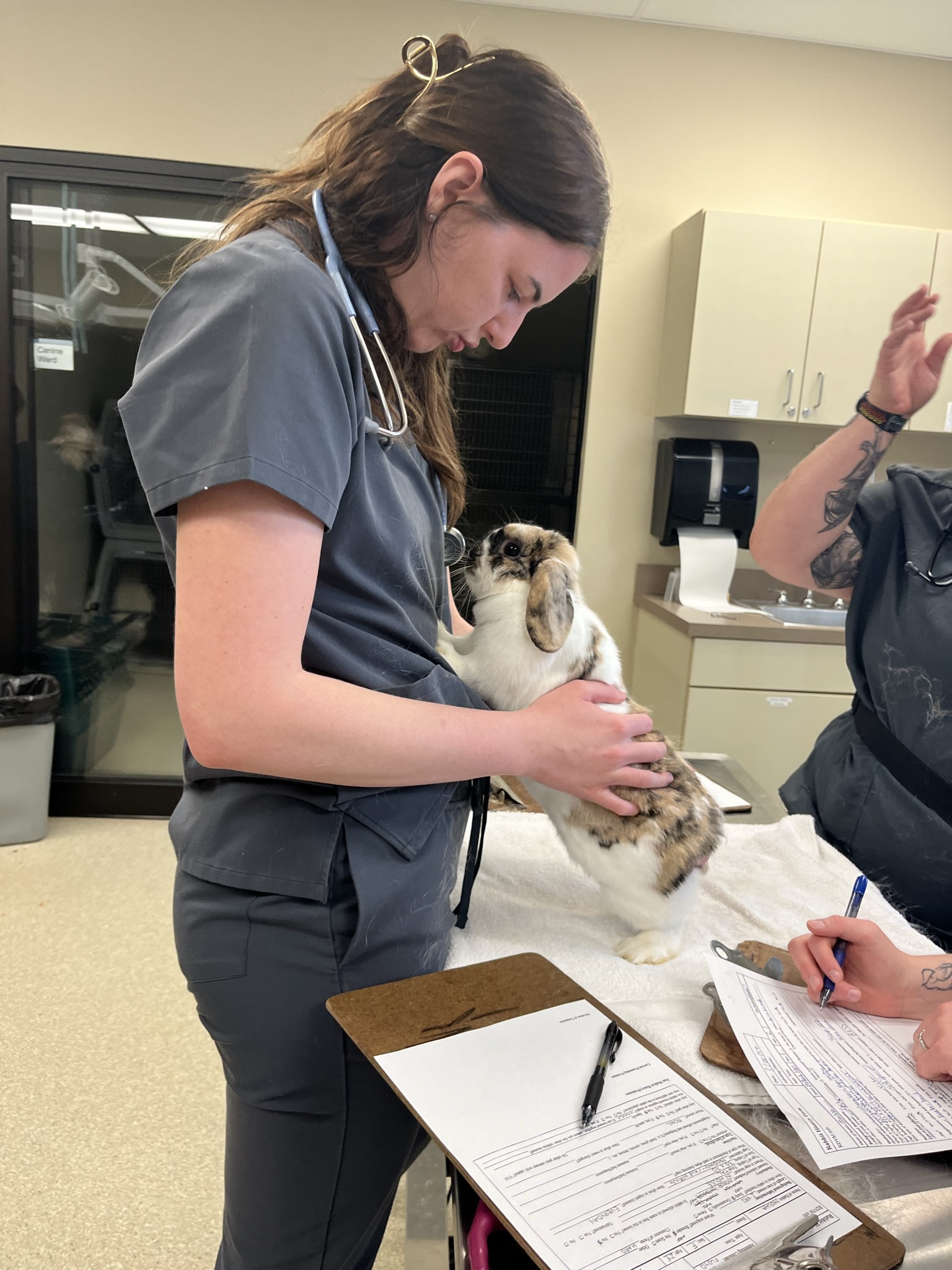
Chances are, if you see your veterinarian regularly, you have a vet tech in your life that you know and love — the one who spoils your pet with affection and treats, gives them attention when they’re nervous for a blood draw, and helps pet parents understand medication and discharge instructions.
Jarett Floyd, a registered veterinary technician (RVT) and department head of veterinary technology at OSU-OKC, explains the ins and outs of the all-encompassing work an RVT does each day.
“It may be easier to explain what they don’t do,” Floyd says with a laugh. “They do most everything for daily operations in a clinic, from prepping supplies and equipment, aiding the veterinarian in procedures and surgical recoveries, to going over medication and discharge instructions with clients; they do it all. They are honestly the right hand of the veterinarians in so many different ways.”
Floyd has a big job herself, preparing students to enter the veterinary world.
“At OSU-OKC, we have a two-year RVT program, where students are able to graduate with their associate degree after passing the necessary licensing and exams.”
While many veterinary offices do not require their employees to have RVT degrees, Floyd explains the differences are crucial when it comes to the skillset RVTs obtain. For RVTs, they must graduate from an AVMA CVTEA-accredited technology program (Committee on Veterinary Technician Education and Activities), where they learn more than 250 essential skills that translate to their daily work.
“The why behind what we do is very important,” Floyd explains. “The students take their work very seriously because it is a big job. On top of the university requirements for graduating, they also have to pass a state licensing exam for any state they want to work in and pass the Veterinary Technician National Exam.”
OSU-OKC became accredited in 2000 but first got their start in 1998 through Murray State’s RVT program out of OSU, the first of its kind in Oklahoma. Since then, the program has continued to grow, with the current year bringing about the most applicants the program has ever seen. On average, there are 35 to 45 students in the RVT program, and over the past five years, 15 to 20 students graduated annually with their degrees.
Impressively, the program boasts a 100-percent pass rate over the last three years for their students sitting for the Veterinary Technician National Exam, an amazing accomplishment and testament to the program itself.
“The national average is about a 65-percent pass rate for the National Exams, so we are very proud,” Floyd says.
A recent anonymous donation has allowed the university to purchase new training equipment for hands-on learning, an essential component of the course work, which allows the students to have repetitive exposure before moving on to live animal labs. For much of the hands-on work, RVT students at OSU-OKC work with rescue and shelter animals; hands-on experience caring for large animals, like cattle and horses, is performed off-site.
“If a student has a big interest in working with livestock, we always try to make sure they can do their preceptorship at a large animal hospital since that is not something we can do every day at our facility,” Floyd explains.
For the field itself, Floyd says it is expanding faster than they even realize. “There are so many opportunities for students who graduate with their RVT degree — working hands-on in a clinic, research and pharmacy sales, education opportunities, government and wildlife opportunities, specialized paths that require further training. There is a lot of growth happening right now.”
While the average salary for RVTs a few years ago was closer to $36,000, Floyd believes in Oklahoma, specifically, it has grown closer to $42,000. For Floyd, she believes the more the public is educated about the quality of animal care RVTs bring to the field, the more job opportunities will open up and the more the field itself will grow and continue to bring about new opportunities.
“RVTs are essential to any veterinary practice and the growth of that practice,” Floyd states. “They handle so much between client communication to the hands-on care of the animals; they are essential to the function of any clinic.”
The Veterinarian Technician’s Oath, found on OSU-OKC’s website, reads: “I solemnly dedicate myself to aiding animals and society by providing excellent care and services for animals, by alleviating animal suffering, and promoting public health. I accept my obligations to practice my profession conscientiously and with sensitivity, adhering to the profession’s Code of Ethics, and furthering my knowledge and competence through a commitment to lifelong learning.”
For Floyd and her team, that is exactly what they teach each day, in hopes of adding dedicated individuals to their field. To learn more about OSU-OKC’s RVT program, visit osuokc.edu/academics/
degrees/veterinary-technology.
Sidebar
National Veterinary Technician Week
Celebrating RVTs Since 1993
In 1961, State University of New York-Delhi (SUNY Delhi) was the first college in the United States to develop a veterinary technology program to train professional veterinary technicians, according to the AVMA. Before that, the field of veterinary medicine did not include trained technicians, and veterinarians would often practice alone with the help of a layman receptionist who would also perform housekeeping and basic nursing duties. Initially called Animal Health Technology, Delhi’s program produced its first eight graduates two years later. SUNY Delhi was soon recognized as a national trendsetter.
As of January 2025, there are 218 veterinary technology programs accredited by the AVMA Committee on Veterinary Technician Education and Activities in the United States.
While registered veterinary technicians are valued every day of the year, National Veterinary Technician Week brings awareness to their importance. The holiday of appreciation was established in June 1993 when a resolution was passed by the National Association of Veterinary Technicians, declaring every third week in October as National Veterinary Technician Week.