by Sharon Bishop-Baldwin
Photos courtesy of the Oklahoma City Fire Department
The stray dog that began hanging out in your yard about dusk has no collar or tags, but it’s clearly someone’s pet. It’s hungry, thirsty and agitated.
But you have no place to keep it inside and no way to contain it outside. And to do nothing until a veterinary office opens the next morning is to put the dog at risk of injury or even death.
It’s a helpless feeling, one many people have experienced.
Thanks to a partnership between Oklahoma City Animal Welfare and the Oklahoma City Fire Department, Oklahoma City residents now have another option.
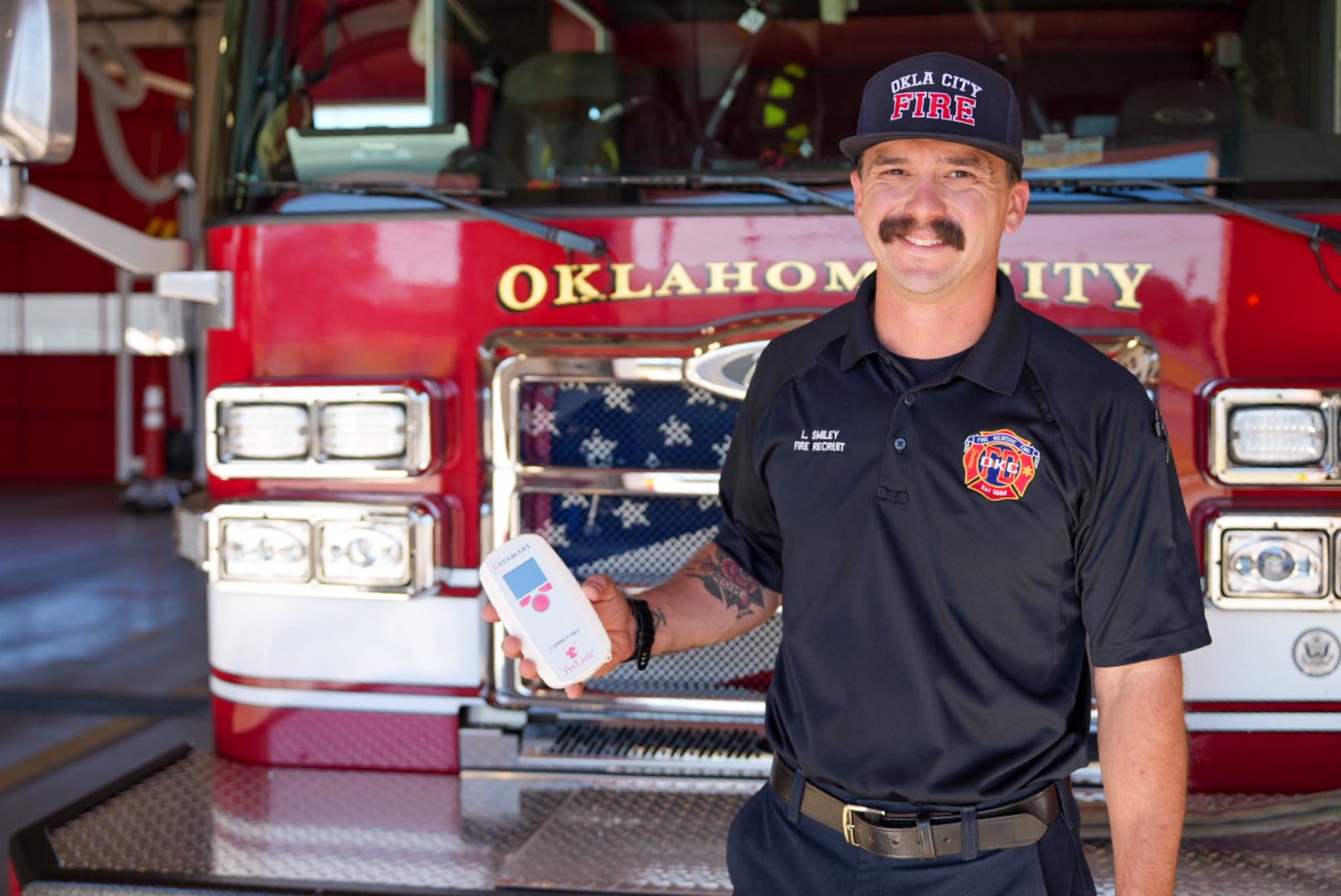
Fire Station No. 25 at 2701 S.W. 59th St. and Fire Station No. 30 at 4343 S. Lake Hefner Drive have been equipped with microchip scanners, thanks to a generous donation from an Oklahoma City animal shelter foster and volunteer who wishes to remain anonymous.
Residents who find a stray animal can take it to either fire station day or night, and firefighters will scan the animal for a microchip. If one is found, the scanner will display a code that links to a universal lookup system, which can provide information about the animal’s owner if registered.
“I think it’s a great program,” Fire Chief Scott Douglas said, noting that the city’s animal shelter, like most shelters everywhere, “is bursting at the seams.”
Douglas said the two scanners were put into service on Nov. 3, and that within three days of the launch, a lost dog was reunited with its owner.
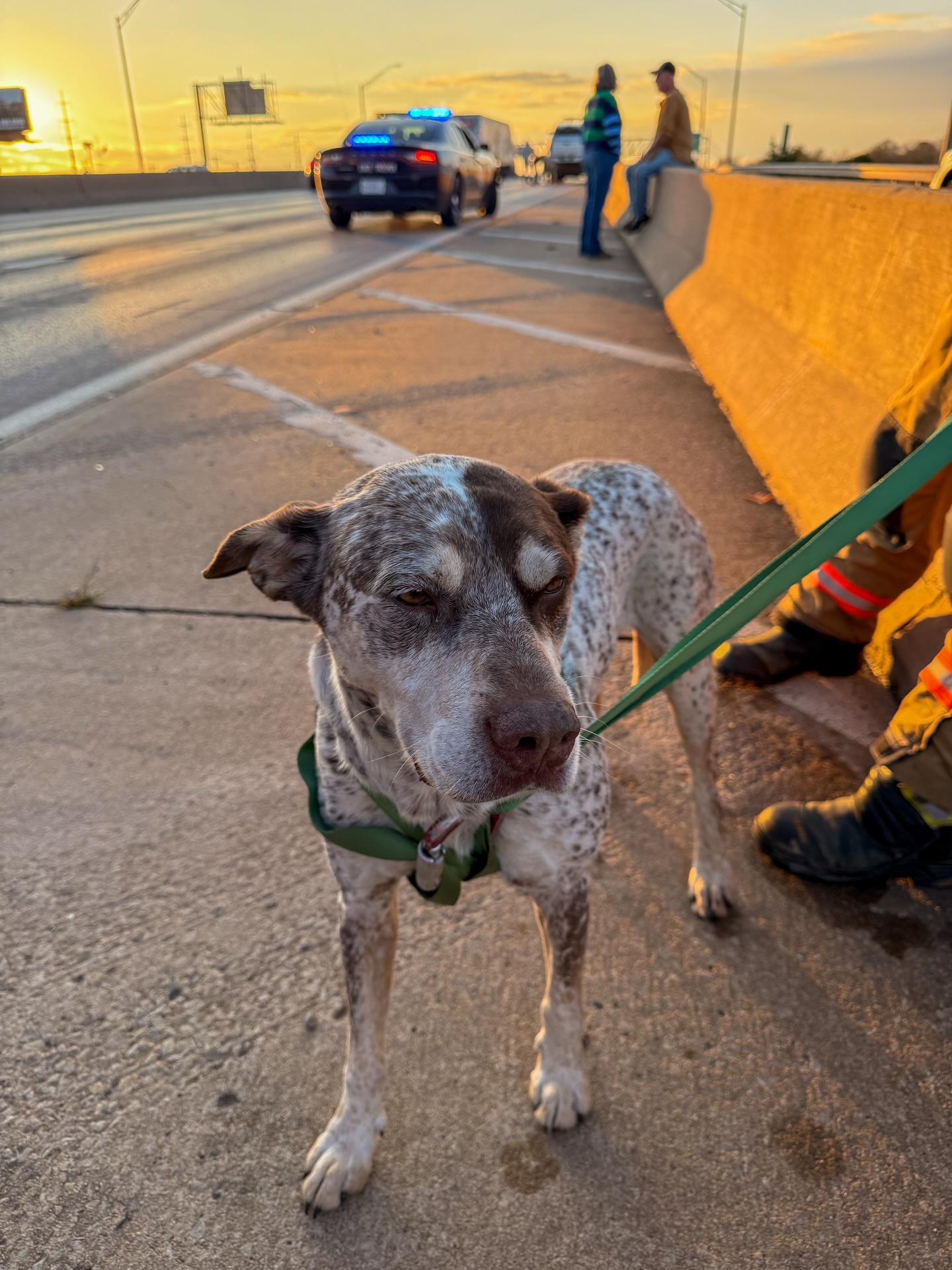
Two days before Thanksgiving, firefighters from Station No. 30 were responding to a multivehicle traffic accident on a highway when they found a dog huddled against the concrete median, Douglas said.
The crew took the dog back to the station and arranged to have a battalion chief bring a chip reader over to scan the dog. That pup, Sue Magoo, was then able to be reunited with her relieved owner, Douglas said.
Jamee Suarez, president and co-founder of the Oklahoma Alliance for Animals, said efforts to put scanners in fire stations are “really great because people find animals at all times of the night, and the fire station is a logical place because they are open all night.”
Suarez said the effort also will help reduce calls to animal rescue organizations when people realize they can take an extra step themselves before possibly engaging those already overworked organizations.
Microchips were once expensive and uncommon in pets, Suarez said, but many rescue and animal welfare organizations now routinely offer reduced-price or even free microchipping clinics. She added that cats, and not just dogs, are frequently chipped.
“Responsible pet owners really want their pets microchipped,” she said. “We even had a pig brought in to one of our microchip clinics one time.”
Suarez said being able to take an animal to a fire station to check for a microchip will be especially helpful at night and on weekends and holidays, when most veterinary clinics are closed and when rescue organizations have fewer resources to help with stray animals.
“It’s hard sometimes for people to corral an animal overnight when maybe they have their own pets or just have no place to put the (stray) animal,” she said.
But even the small step of taking a found animal to a fire station for assistance is expected to reduce shelter intake by keeping lost pets in their neighborhoods until their owners can be located, officials said.
That will help keep shelter kennels available for animals that truly have no place else to go.
Also importantly, the possibility of reuniting lost pets with their owners quickly will keep more animals off the streets, where vehicle traffic is one of the biggest threats to them.
“It’s always better for a lost pet to go directly back home rather than spend time in the shelter,” Ronnie Schlabs, former superintendent of Oklahoma City Animal Welfare, said in November, when the scanner donation was announced. “By working with the Fire Department, we’re making it easier for neighbors to help neighbors and giving families more opportunities to be reunited quickly.
“This partnership saves time, reduces stress on the animals and ultimately saves lives. We are grateful to the Oklahoma City Fire Department for their support and commitment in helping make this program possible.”
It’s important to note that fire stations will not serve as drop-off locations for animals. They are meant only to serve as locations where microchips can be read.
Residents who are unable to hold onto a found animal until it can be reunited with its owner or who need assistance should call Oklahoma City Animal Welfare at (405) 297-2255.
Microchip Scanners
OKC Fire Station Locations
Fire Station No. 25, 2701 S.W. 59th St.
Fire Station No. 30, 4343 S. Lake Hefner Dr.
Scanners donated by an Oklahoma City animal shelter foster and volunteer who asked to remain anonymous.