by Inger Giuffrida, executive director, WildCare Oklahoma
Photos courtesy of WIldCare Oklahoma
Every day, WildCare Oklahoma receives injured, ill, and orphaned wildlife from
throughout the state. Although the organization is one of the larger wildlife centers in the United States, taking in about 7,000 patients annually, the individual stories of patients exemplify the purpose of WildCare and the work of its staff, fellows, interns, and volunteers.
Here are some tales of specific patients that WildCare has helped.
American Toad That Couldn’t Hop
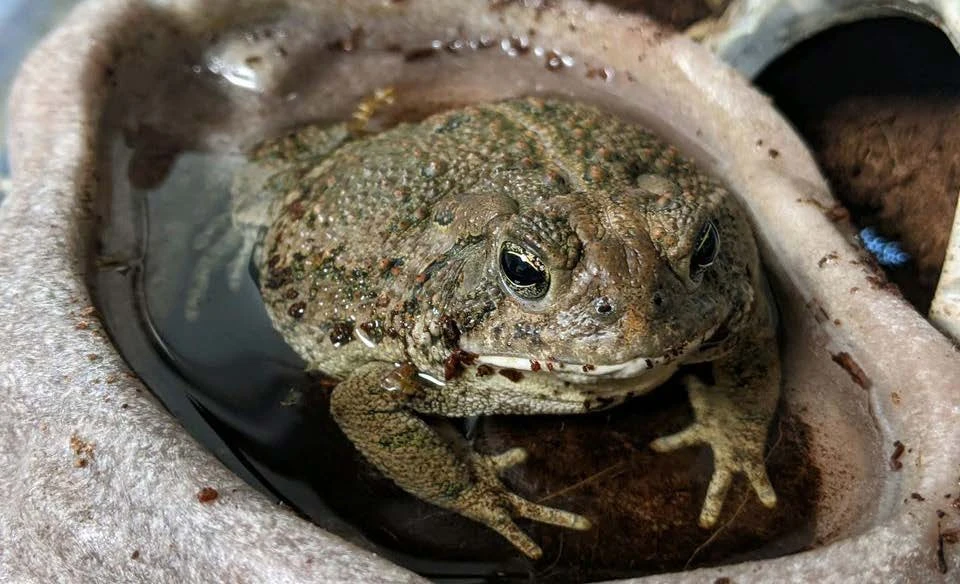
People don’t often think of toads or frogs when they think of WildCare Oklahoma, but WildCare receives many amphibians. Since 2015, WildCare has admitted 143 frogs, toads, and salamanders for care. In September 2022, caring people who had gotten to know a resident dwarf American toad in their yard brought it to WildCare. They had noticed that the toad suddenly was dragging his leg, and they knew he needed help.
On the toad’s arrival at WildCare, staff members took a radiograph (X-ray) of his leg. The veterinary team confirmed that the leg was broken. Because reptiles and amphibians go into a stage of brumation over the winter (like hibernation), the staff planned for this little one to overwinter at WildCare. The leg is healing, and his appetite has improved steadily. In fact, he has gained 30 grams, an impressive amount for such a small creature. The toad will be returned to the property where he was found and will hop to freedom this spring.
Red-Tailed Hawk Illegally Shot
A red-tailed hawk arrived at WildCare through a field intake by an Oklahoma City animal-welfare officer. The officer took the hawk to the Oklahoma City Animal Shelter, where people can drop off wildlife. Daily, WildCare volunteers transport wildlife from the shelter to WildCare’s facility in Noble.
After the hawk’s arrival, Dr. Kyle Abbott, WildCare’s staff veterinarian and medical director, conducted a physical examination and took radiographs of the hawk’s obviously injured wing. The radiographs confirmed that the hawk had been shot, resulting in a severe fracture to its left wing and damaged flight feathers. This hawk has remained in care for more than two months so far because of the need for physical therapy and time to regrow feathers.
This red-tailed hawk is one of 15 migratory birds brought to WildCare suffering from gunshot wounds in 2022. Shooting migratory birds in the United States, including Oklahoma, is illegal under the Migratory Bird Treaty Act unless the person has secured special permits from U. S. Fish and Wildlife Service.
Fennec Fox with Nowhere To Go
In the past two years, WildCare has received and cared for almost 100 animals seized by the Oklahoma Department of Wildlife Conservation or Norman Animal Welfare. Many of those animals were dehydrated, emaciated, deprived of adequate shelter, and lacked access to food, water, and sunlight. In some instances, the animals had been used in illegal breeding operations; in other cases, they were illegally held as pets.
WildCare admitted kangaroos, bat-eared foxes, Aldabra tortoises, Egyptian flying bats, Asian small-clawed otters, New Guinea singing dogs, an African serval, an arctic fox, and more. None of those animals could be released because they were not native to Oklahoma, and no other facility in Oklahoma would take them. All of them needed medical and rehabilitative care. Some of the animals did not survive because of the maltreatment they had received before ending up at WildCare.
However, WildCare rehabilitated and rehomed most of them. Because of WildCare’s high standards, the staff secured placements in accredited zoos and sanctuaries throughout the United States, driving or flying the animals to their forever homes. Although WildCare has received no state support and minimal city support during and after those emergencies, WildCare’s staff and board wanted to ensure that the animals got the second chance they so deserved.
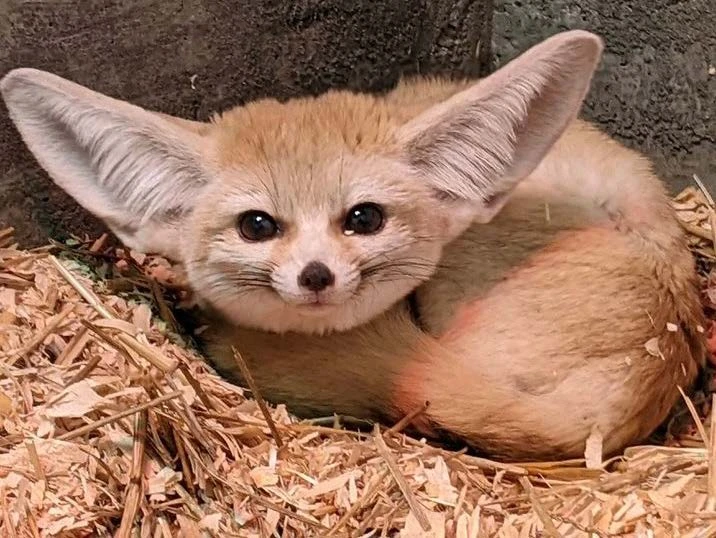
Fennec foxes are native to Northern Africa and live in the desert. They are sold as pets to people attracted to their cute faces. They do not make good pets — they do not like to be handled, and they like to dig. WildCare received eight fennec foxes. They were underweight and had unhealthy fur, likely because of poor nutrition and lack of sunlight. In the past 18 months, seven of them have been placed throughout the United States in zoos affiliated with the Association of Zoos and Aquariums. Only one fennec fox remains in WildCare’s custody; however, staff members
recently confirmed his placement at an AZA zoo in the northwestern United States.
A Grounded Painted Bunting
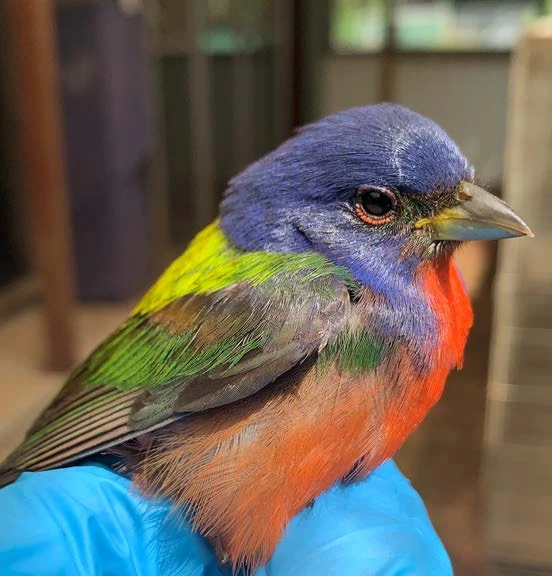
Although buntings spend the winters in Central America, Oklahoma is in their summer breeding range. A male painted bunting, one of WildCare’s most colorful patients, was brought in with injuries from flying into a window. The bunting was unable to stand and had reduced motor responses in his left leg but no fractures. After a course of medication for pain and swelling, the staff moved the bunting to an outside flight enclosure to practice flying and regain strength. After two weeks, the bunting was fully recovered and released.
This bunting was one of 1,988 songbirds brought to WildCare in 2022 alone. All too often, songbirds are brought to WildCare with preventable injuries such as dog and cat attacks and window strikes.
To mitigate the chance of birds flying into windows, it is advised to mark windows that are prone to bird collisions. (1) Mark the window on the outside with soap or tempera paint. (2) Decorate with decals, stickers, suncatchers, Mylar strips, masking tape, or other objects (even sticky notes). These are effective only when spaced very closely. (3) Cover the window with bird tape, which is long lasting and offers an easier way to apply the correct spacing of dots. (4) Affix screens or taut nets. The screens must be on the outside of the window and must cover the entire surface. (5) Cover the window with one-way transparent film — you can see out, but the window will be opaque on the outside. This can reduce the amount of light that comes into your window and help to reduce cooling costs too.
Measures such as these can save the lives of thousands of birds and prevent them from needing help from WildCare Oklahoma or another wildlife rehabilitator.
Orphaned Bobcat Kittens
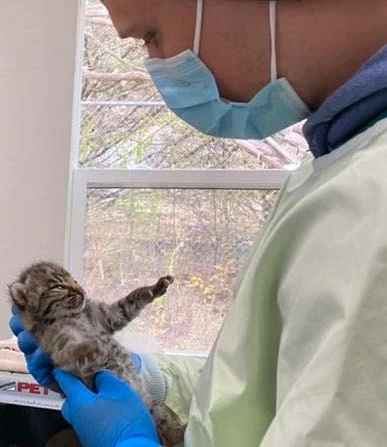
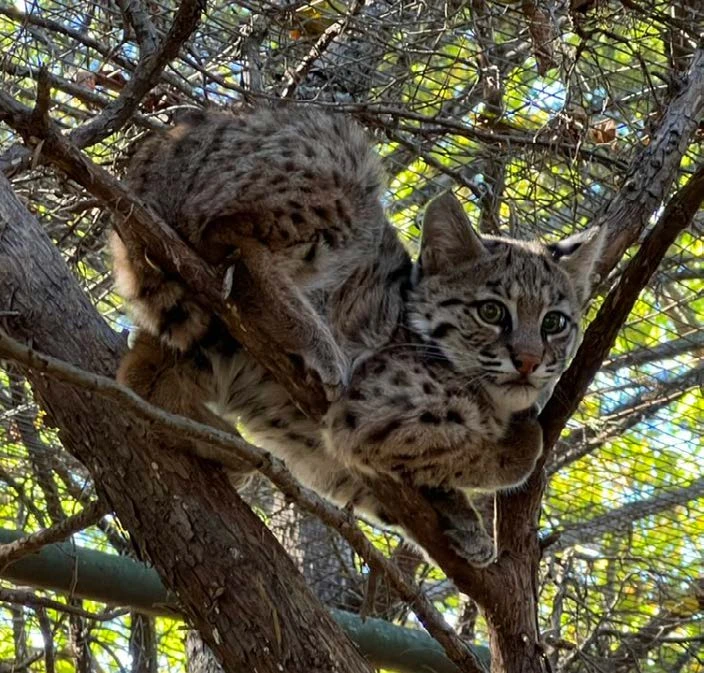
In early December 2022, WildCare admitted two young bobcat kittens after their den had been destroyed by construction activities. The rescuers had attempted to reunite the kittens with their mother by leaving them near the den and watching for the mother’s return. (When possible, WildCare encourages members of the public to attempt to reunite baby animals with their parents.) After several days, the mother had not returned, and the rescuers presumed she had been killed. They immediately brought the kittens to WildCare.
WildCare’s team completed a physical examination and found that the kittens were dehydrated and underweight. The team also estimated that they were only about four weeks old. Unfortunately, one kitten died within a day. The other kitten, however, survived.
With constant care by WildCare’s animal-care team — coming in early and staying late to make sure the kitten had everything she needed, including regular feedings — her dehydration was reversed, and she gained weight. She is now fully weaned, eating on her own, and eagerly exploring her surroundings.
WildCare is also caring for two orphaned juvenile bobcats that came in as older kittens in September 2022. To minimize the chance of habituation to humans, WildCare’s team has been slowly introducing the little kitten to the older pair, hoping they will bond with one another as a small family group of three. Introducing the young bobcats to one another has been a gradual process that staff members supervise closely. They started the little kitten in an adjacent enclosure so the juvenile bobcats could see, smell, and interact through the caging. She was quite interested in the larger kids next door, but they remained aloof, like uninterested teenagers. The staff knew the juveniles were curious about their new little neighbor, however, and recently put them all into the same enclosure together.
All three kittens have a journey ahead of them at WildCare before they can be released to the wild, so their story is not over.
The power of the thousand stories about WildCare’s wild patients is the compassion that stands behind them — people who rescue them often make long drives to WildCare, staff members have dedicated their lives to caring for them, volunteers share their time and talent to support the staff and the organization, and donors provide the resources for this special work. All of these animals and many others are getting their second chance at life because of the compassion and caring of people.