by Inger Giuffrida, executive director, WildCare Oklahoma
Holidays often have animals associated with them. In February, we all
look to a groundhog in Pennsylvania to tell us whether we will have six more weeks of winter. In the spring, we await the arrival of the Easter bunny, which hides chicken eggs for children to discover. And of course, the bald eagle is associated with all of our national holidays, from the Fourth of July to Veterans Day. This article will explore wildlife that we often think of in autumn.
Bats Fill a Unique Ecological Niche
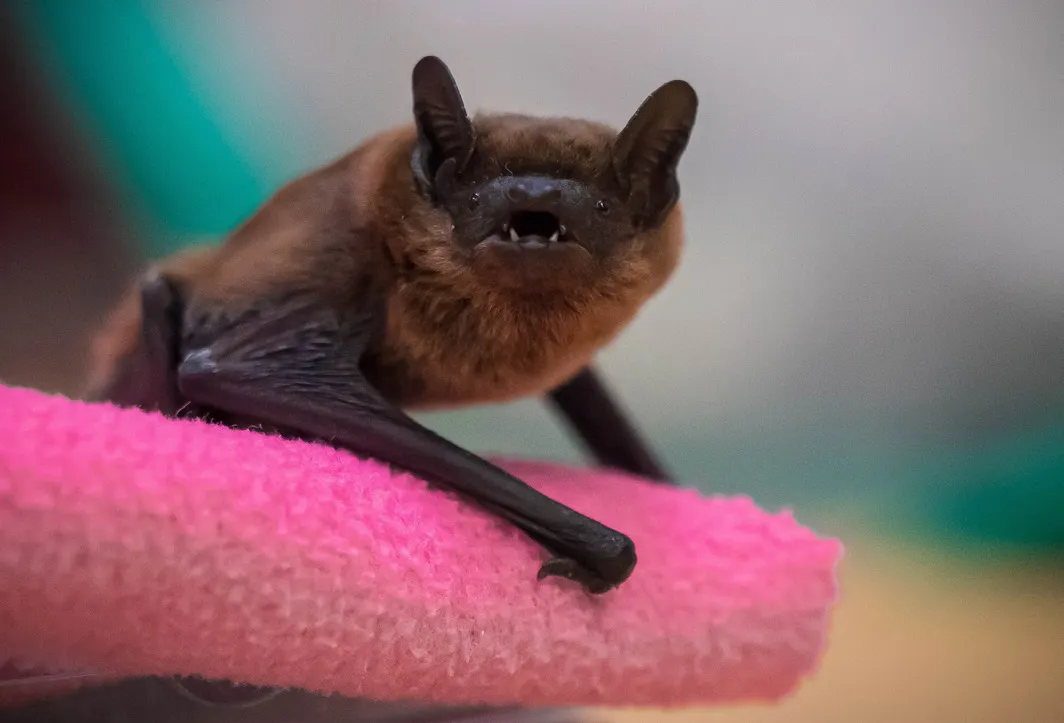
Bats are found on every continent except Antarctica, and worldwide, there are more than 1,400 species of bats. Bats are the only flying mammals, which means they are warm-blooded and furred and nurse their young. Most bats are exclusively nocturnal — they sleep during the day and hunt, eat, and live their lives at night. Bats roost during the day in dark, quiet places.
You might think of caves, but most bats roost in trees, using the foliage as cover. Some bats also roost in attics, eaves, and bat boxes. Because they are nocturnal, they do not directly compete with diurnal birds, who often are out in search of similar food sources — flying insects, fruit, pollen, and nectar.
Most bat species are insectivorous (about 70 percent of them). That means their diet is completely comprised of insects. The other 30 percent of bats eat a variety of food sources, including fish, frogs, nectar, sap, pollen, and fruit. Just like other animals that visit plants for food, bats play an important and irreplaceable role as pollinators and seed distributors. The human food supply relies on bats as well as bees, butterflies, and other pollinating insects.
With insectivorous bats, the numbers and amount of food they can consume is impressive. In a single evening, an average bat will eat as much as 50 percent of its
body weight in insects. And many of those are the insects that annoy humans the most — mosquitoes, biting flies, and agricultural pest insects. A lactating female bat might consume as much as 100 percent of her body weight in insects. That enables her to produce enough milk to support her babies, called pups. So if you have only five bats hunting in your yard throughout the spring and summer, that small group will have eaten at least 12 pounds of flying insects.
So how did bats get a spooky reputation? One reason is that they are nocturnal by nature — they are one of the few noninsects that you can see flying in the night. And as the only flying mammal, they have some of the qualities of birds and rodents. During Samhain, a Gaelic festival marking the end of harvest season and the beginning of the new year, people lighted bonfires in celebration. Firelight attracted insects, which attracted bats. People likely felt unsettled by seeing those flying rodents swoop in every direction above their celebratory fires. Bats were also said to travel with vampires or, in some stories, they turned into vampires.
Tom Turkey — A Thanksgiving Tradition
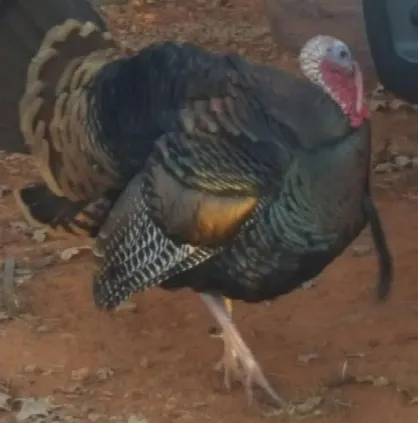
Many people in the United States celebrate Thanksgiving. Although it is believed that many foods were enjoyed during the first Thanksgiving feast, including cod, waterfowl, and deer, it is turkey that we most associate with Thanksgiving dinner. The National Turkey Federation reports that 88 percent of American households eat turkey on Thanksgiving Day. But there is much more to the turkey than people realize when gathering around the dinner table on Thanksgiving Day, particularly considering the relative of domestic turkeys — the wild turkey.
There are six subspecies of wild turkeys in the United States, which were nearly extinct by the early 1900s because of deforestation (destruction of their preferred habitat) and overhunting. Reintroduction projects increased their populations throughout the country from about 30,000 in the 1920s and 1930s to more than three million today. Although wild turkeys are seen most commonly in flocks on the ground — they are extremely social animals and feed on the ground — they do in fact fly. They generally fly only as much as 100 yards at a time but can fly as fast as 40 to 50 miles per hour. And they can run as fast as 25 mph. It’s hard to imagine that they can move all that plumage so
quickly! Although domestic turkeys also can run (but not as fast as wild turkeys), they are unable to fly because of their size and physiology.
To stay out of reach of predators, wild turkeys roost on branches 20 to 30 feet above the ground. Smart turkeys! In fact, Benjamin Franklin is often credited with having wanted the turkey as the national symbol instead of the bald eagle because he thought turkeys were more intelligent and industrious. Franklin never officially proposed this, however; he only made those comments in a letter to his daughter.
The Animals of Christmas
After Thanksgiving, many households turn their attention to the December holidays — Hannukah, Kwanzaa, and Christmas. Of all the holidays, there are probably more animals associated with Christmas than any other. First, there were the animals in the manger, often represented by sheep cared for by shepherds, donkeys that carried the Holy Family to the manger, camels that brought the Three Wise Men to Bethlehem, and cattle that were lowing in the manger.
Another popular animal reference can be found in “The Twelve Days of Christmas.” The true love about which the song is sung receives a partridge, turtledoves (similar to mourning doves), French hens, calling birds, laying geese, and swimming swans — 23 birds for Christmas! In the popular poem “A Visit from St. Nicholas,” better known as “’Twas the Night before Christmas,” the house was described as so quiet that nothing was moving about —
not even a mouse! And holiday décor is filled with many common mammal and bird species — red foxes, bears, squirrels, Northern Cardinals, and Carolina chickadees — in the snow. But the most famous animals associated with Christmas are reindeer, called caribou in North America.
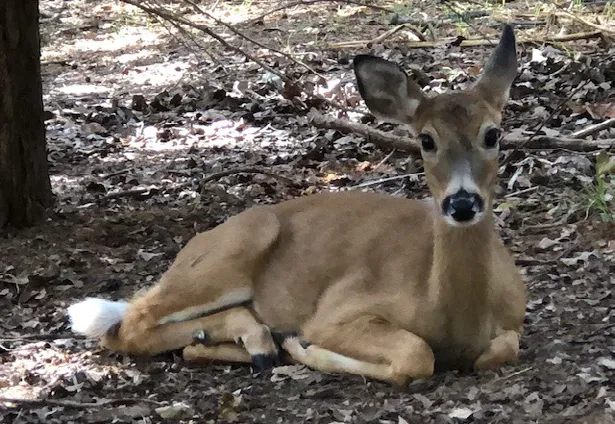
There are no reindeer in Oklahoma outside of zoos and private ownership, but they are members of the same family (Cervidae) and subfamily (Capreolinae) as white-tailed deer, which are common Oklahoma residents. Safety from predators and habitat loss are the primary reasons it is not uncommon to see deer throughout Oklahoma, even in urban and suburban environments.
By nature, deer are very sensitive to sound, smell, and visual cues. Those sensitivities help them to survive in the wild. The most cautious of deer are the ones that will be more likely to evade predators and live to produce and raise young. Deer recognize that areas near our homes tend to be safer from predators, so mother deer are likely to lead their fawns to quiet properties and leave them there while they forage nearby.
This holiday season, take some time to enjoy the animals we associate with autumn. To support them, keep your bird feeders filled with fresh seed and suet, provide peanuts and finely chopped fruit, and maintain a clean water source throughout colder weather. By doing those things, you will help to support the wildlife we all cherish as the hard winter months approach.