by Inger Giuffrida, executive director, WildCare Oklahoma
With fall comes the migration of millions of birds. After traveling
north to Oklahoma in the spring and hatching and rearing their young, many species of birds that bring color and song to our summer landscape will head south to overwinter from southern Texas to as far away as Central and South America.
There are four flyways in the United States: Pacific, Central, Mississippi, and Atlantic. Flyways are like bird superhighways, and Oklahoma is part of the Central Flyway. Hundreds of species of birds make their way from, through, or to the state in the fall,
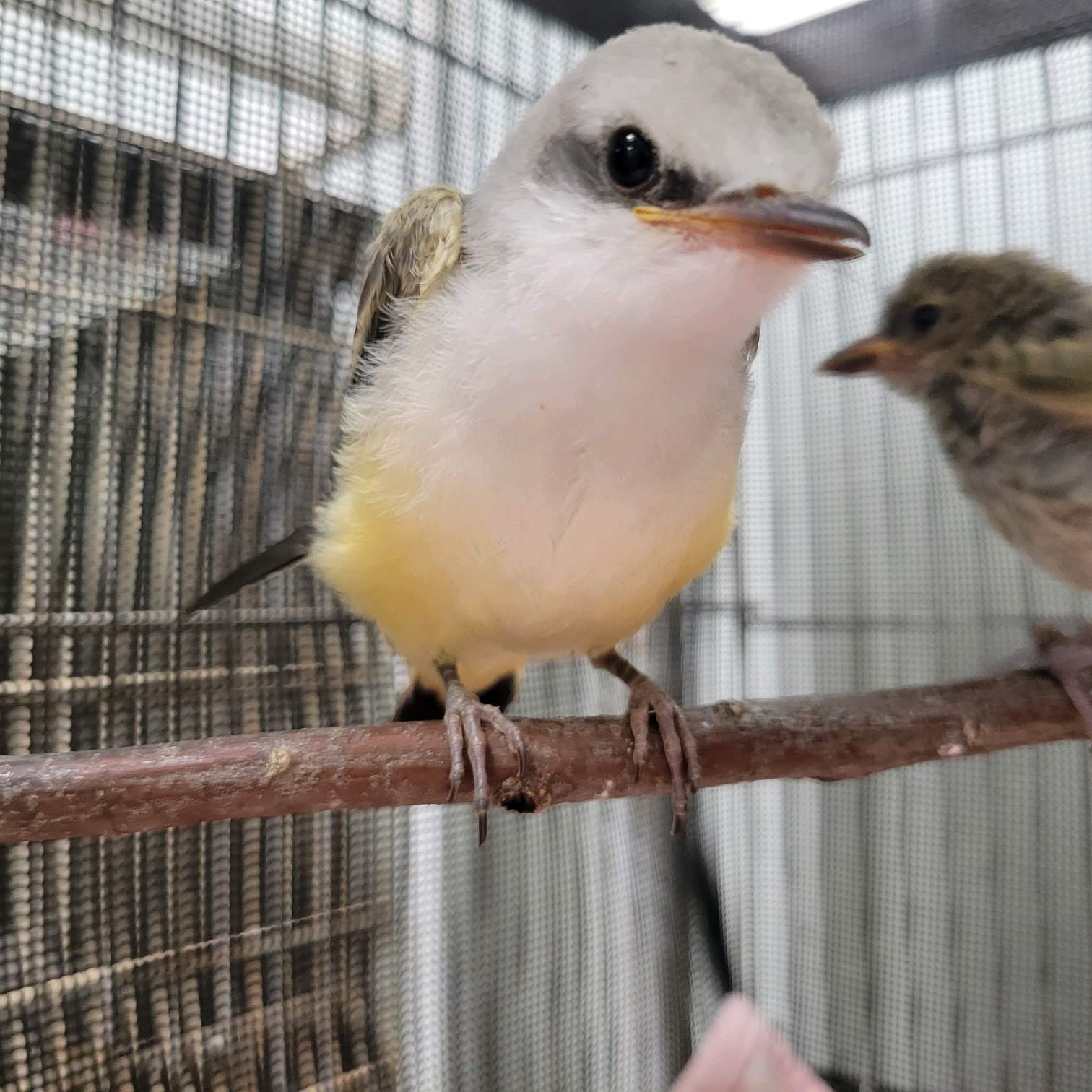
depending on the species and the migration starting point. For example, scissor-tailed flycatchers, the Oklahoma state bird, leave in the fall for overwintering grounds in Central America. Sandhill cranes travel through the state after having spent the summer in Alaska, the Canadian territories and provinces, and the northern United States. Southwestern Oklahoma serves as overwintering territory for some of those birds.
With billions of birds on the move, there are specific actions you can take to ensure that they are more successful on their arduous, danger-filled journeys.
Turn Off the Lights
Although it is surprising to many people, most birds migrate at night, using the stars and moon to navigate. Light pollution from cities, stadiums, businesses, and homes can create confusion. In many cases, a city or suburb at night can be mistaken for the rising or setting sun. The result can be that birds lose their way. Sadly, they often find their way into hazardous environments, crashing into power lines, buildings, and windows.
Even more fatal to birds, however, is the energy they waste flying around in confusion and crying out to their mates, offspring, and other members of their flocks. This excess, unnecessary calorie use can leave birds in a weakened state, making them more vulnerable to all the hazards in human environments.
By turning off lights in parking lots, on front porches, inside buildings (particularly upper floors in all buildings), and in sport venues — baseball, soccer, and football fields and stadiums — we could help birds make safe passage through the state to their winter homes.
For situations when lighting is needed, there are solutions. For example, when people work in buildings at night, pull down shades inside to keep the light from escaping through the windows and confusing birds. For nighttime sporting events, turn off the lights when the game is over and the fans have left the field or stadium.
When outdoor lighting is used for safety and security reasons, there are two options. (1) Motion-activated lights come on only when prompted by motion and then automatically shut off after a set period of time. (2) Shielded light fixtures direct light down or to the target area and prevent light from trespassing up or out, depending on the shield. Many light fixtures can be purchased with built-in shielding. The shielding is correct if you cannot see the lightbulb when you look at the light. For existing light fixtures that have already been installed, you can buy light shields.
Finally, there is evidence that leaving lights on at night does not make people safer. Most home break-ins occur between 10 a.m. and 3 p.m., when people are commonly not at home. In addition, lights left on at night create shadows to hide in and provide light for potential perpetrators to see by.
You will also save money, lessen your environmental impact, save a lot of birds, and see more stars at night by turning off excess lights.
Prevent Window Strikes
According to the American Bird Conservancy, 300 million to 1 billion birds die each year from collisions with glass on skyscrapers, building atria, and homes. Reflective glass, clear glass, and clear glass with a lot of plants behind it, such as in the lobbies of many buildings, disorient birds and cause window strikes. Many people, hearing a bird strike a window, will assume it has been stunned and will feel reassured if the bird eventually flies away. However, many if not most of those birds fly off only to die slowly outside of view because of injuries sustained from the collisions.
In addition to turning off lights — inside and outside of buildings — you can add decals or bird tape to your windows. Bird tape, dots, and decals break up the reflectivity of the glass, allowing birds to see and avoid windows. The key to effectiveness is following the rule of two inches by four inches. The visual barrier should be spaced every two inches horizontally and every four inches vertically for best results.
Keep Cats Inside
Cats kill 1.3 to 4 billion birds each year in the United States alone, according to the Cornell Laboratory of Ornithology’s All About Birds website, with 69 percent of those kills attributable to feral or unowned cats. Cats are an invasive species in the landscape that cause damage not only to birds but also to reptiles, amphibians, and other small mammals. For cats that are lucky enough to have homes, an owner can still allow a cat to enjoy the outside by allowing it to go out only when supervised, keeping the cat on a lead, building a “catio” that provides outside time in an enclosed area, and opening windows and allowing the cat to sit in front of a screen.
Bells on collars do not seem to be effective; cat bibs might be a bit better. But nothing is better than keeping cats indoors.
For cats that have been are dumped or are unowned, get them to a shelter so they can be rehomed to appropriate, responsible owners. The best solution with feral cats is a neuter/spay program.


Provide Water and Food
During migration season, offer water for birds. That can be as simple as putting out a birdbath or shallow dish of water. Moving water seems to be especially attractive to wildlife, and you can purchase misters to add to birdbaths or dishes. That will attract many birds for bathing, including hummingbirds, which love the mist. Water-garden ponds and streams are also attractive to birds, squirrels, frogs, turtles, and other wildlife. Butterflies will appreciate shallow puddling areas.
Provide food for birds too. Keep hummingbird feeders filled with nectar and bird feeders filled with a diversity of seeds and other nut and berry mixtures to provide nutritional support.
Better than bird feeders, however, is planting beneficial and native grasses, flowers, plants, shrubs, and trees. These provide everything that birds, insects, and other animals need. Planning and expense are required in creating a landscape that is friendly to birds, pollinators, and wildlife, but it generally requires little maintenance and water because the plants are native or are suited to the Oklahoma climate.
Hummingbirds are attracted to coral honeysuckle, salvia, verbena, red buckeye, Indian paintbrush, phlox, monarda, mimosa, and pineapple sage.
Robins, cedar waxwings, thrushes, bluebirds, woodpeckers, and northern mockingbirds (and opossums, raccoons, rodents, foxes, and deer) will be attracted to fruit-bearing trees and shrubs such as beautyberry, Mexican plum, sand plum, pawpaw, red mulberry, blackberry, black cherry, pokeweed, sumac, viburnum, prairie crabapple, pecan, and persimmon.

Advocate for Birds
With the cumulative loss of 5 billion birds in the past 50 years, birds need help. You can help birds by speaking up for them. Inform neighbors, city councils, county officials, and local chambers of commerce about the effects of light pollution and window strikes. Start a “Lights out for migratory birds” campaign in your community. Work with other animal advocates to mitigate the effects of cats on birds. And make a plan to plant more beneficial plants, shrubs, and trees in your yard, neighborhood, and parks to support birds during migration season and wildlife throughout the year.