

by Jennifer Sharpe | Photos courtesy of Oliver and Friends
Celerity is swiftness of movement, which is why Heather and Andy Anders, owners of Celerity Prosthetics, decided to use the word in their company name.
Although Celerity’s original intent was to design prosthetics for humans, the owners — animal lovers who have seven dogs — have also graciously and generously served the animal community with their devices. “More than you think, animals tend to lose legs,” said Andy Anders, who treated his first animal prosthetic patient, a dog named Lovely, about eight years ago. He did not charge a fee for those services. Since then, Anders says, he has built about a dozen animal prosthetics in the past three or four years, donating his services and talents to help make a difference.
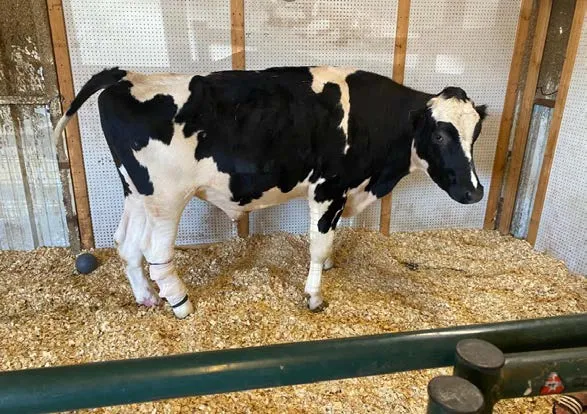
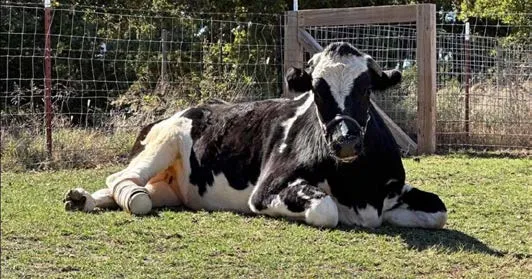
One of the animals who benefits from those prosthetic talents is William the Holstein steer, who was injured when he was a calf and had a leg amputated. “Animals give us so much, and so this is the least that I can do for an animal,” he said. “I just do it because I love it. I love animals, and animals bring me a lot of joy.”
Path to a Prosthetics Career
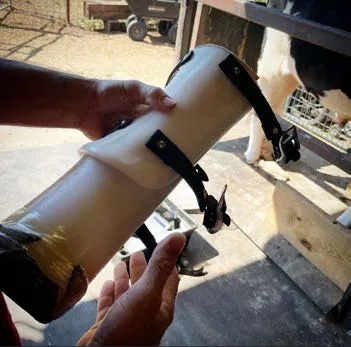
Celerity Prosthetics has been in existence for about 10 years, “making arms from shoulder to fingers and legs from hips to toes,” Anders said. The company also can create cosmetic fingers, silicone restorations, and functioning devices, anything “to get people back to everyday normal activities; that’s the stuff that we fabricate and build.”
Anders originally planned to go to
medical school, but he veered off that plan. After earning a degree in biology, he pursued a degree and then a career in computer science. One day, he saw prosthetics in a clinical setting and was intrigued. He sought observation and volunteer experiences in the specialty, earned a degree in kinesiology, and attended Northwestern University to study prosthetics. Anders completed his residency at Scott Sabolich Prosthetics and worked there for 10 years before starting Celerity.
Anders’ wife is the one who masterminded the company name. “We wanted our name to mean something but to be different,” she said. “We came across ‘celerity,’ which means swift movement, and it embodied our idea of trying to get people back to moving. Our goal is to get people back to walking or doing whatever they had done before their amputations.”
Teamwork and Training
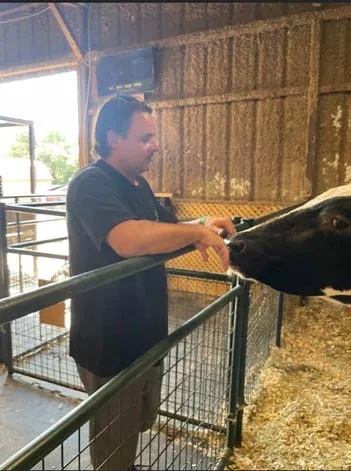
Andy Anders describes working with animals and prosthetics as a team approach,
and he has communicated with veterinarians about how they perform amputations, encouraging them to leave some of the limb so it can be an attachment site for a prosthetic device.
No products on the market are specifically designed for animals, Anders said, so he “makes it up as we go.”
Creating a typical animal prosthesis takes Anders three or four visits, spread out over two weeks to a month.
“It’s a big training effort,” said Anders. Once the prosthetic is fitted and placed, he has the animal stand up. The animal’s reaction is to immediately lift up the affected limb because that is what it is used to doing. To teach the animal what the prosthetic can do, Anders lifts a good limb so that it forces the animal to bear weight on the artificial one. Once the animal patient
realizes what the prosthetic provides, it’s as though something clicks, Anders said, and the animal realizes it can use the limb and walk on it. “Sometimes you just have to guide the first few steps.”
Then it’s a process of careful observation to make sure the prosthetic fits and feels right. “If something is really hurting, the animal is going to short-step on it, put weight on it very minimally, or pick it up right away,” Anders said. “For the most part, the prosthetics are adjustable. So you’re looking for cues from the animal itself, and if it isn’t showing something, then after an hour or two hours, we take off the prosthetic and look at the residual limb for signs of rubbing or oozing.”
Anders said that it’s like being a pediatrician and caring for a baby. You have to read cues and look for signs that something might be wrong because the animal cannot communicate verbally like a human would.
“Our motto with people and with pets is getting them back up to doing what they want to do as swiftly and quickly as possible,” Anders said. “Truly, if I can help make it easier for them to run or stand to eat their dinner, whatever it is, if it’s something I can give them to make their life easier, I will do whatever I can to help them.”
Partnering with Oliver and Friends
Many of Celerity’s animal patients, including William the steer, have come through Oliver and Friends, a 501(c)3 nonprofit farm-animal rescue and sanctuary in Luther. Husband and wife founders Jason and Jennie Hays, who also serves as director, have gone to Celerity Prosthetics for help with many of their animals. “Typically, farms only want to give animals up if they have some sort of disability or if they get injured,” said Jennie Hays. Common issues she sees with rescue animals include blindness, missing a leg, traumatic injury, or an injury that required orthopedic surgery. “We got known for taking in special-needs animals.”
Some of the other Oliver and Friends animals that Anders has worked with include Zuri the goose, who needed two prosthetic feet, one for walking and one for swimming, and Dora the pig.
“Andy and Heather have been so amazing,” Hays said.


