by ANNE COSGROVE WIMBERLY
“I’m a patient person, and I like to give dogs the benefit of the doubt,” said Cassie Grimm, a singer-songwriter and poet, who lives in Oklahoma City with her husband, mother and younger brother.
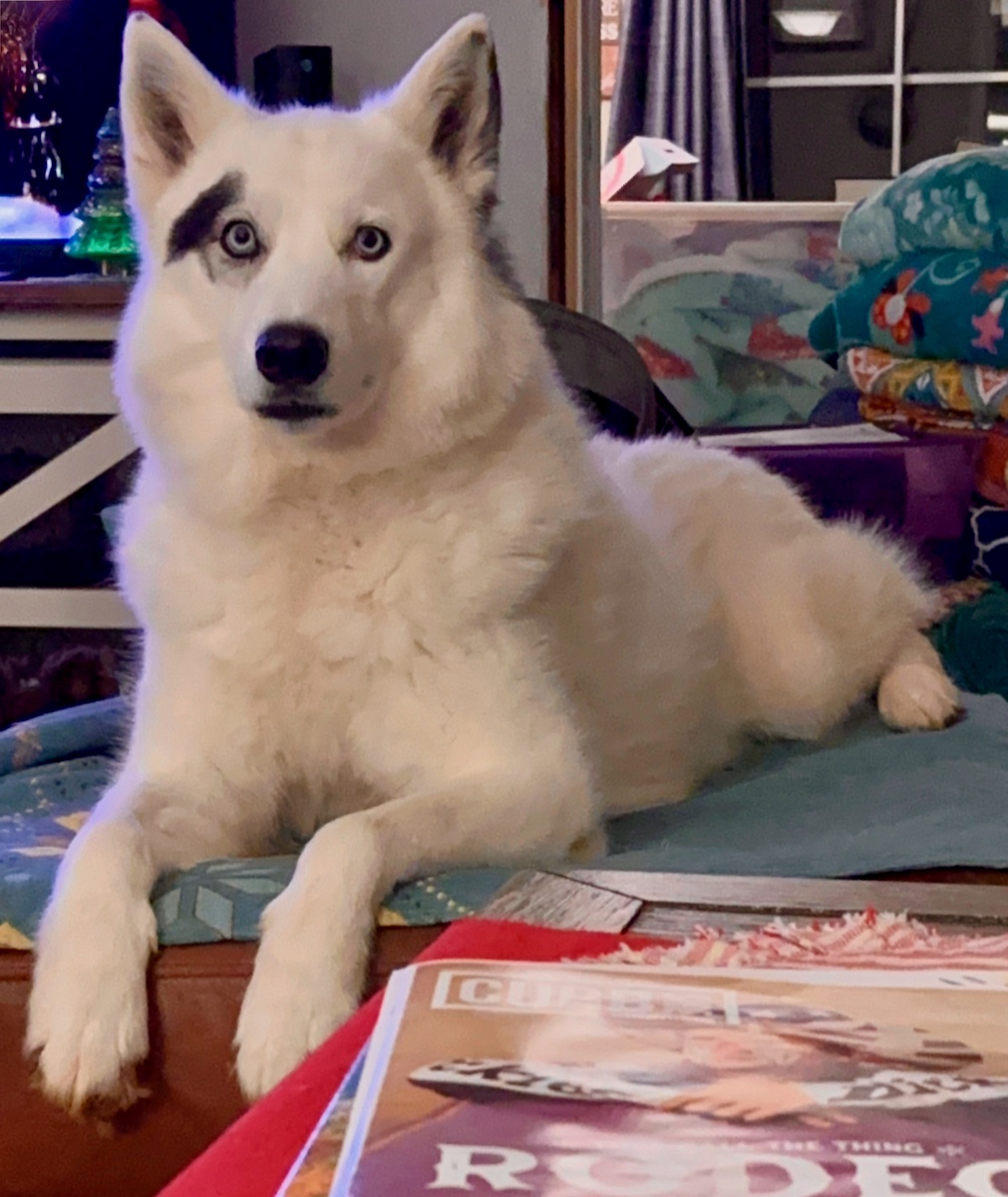
Patience is essential because the only thing Grimm’s two dogs have in common is their coloring. Everest, a 9-year-old white Husky, has two black marks — one by her right eye and the other above her right hip — and enjoys a life with little direct attention. Eloise, a 5-year-old, 50-pound Dalmatian, sports at least 101 spots and is constantly ready for pets, hugs and a game of fetch.
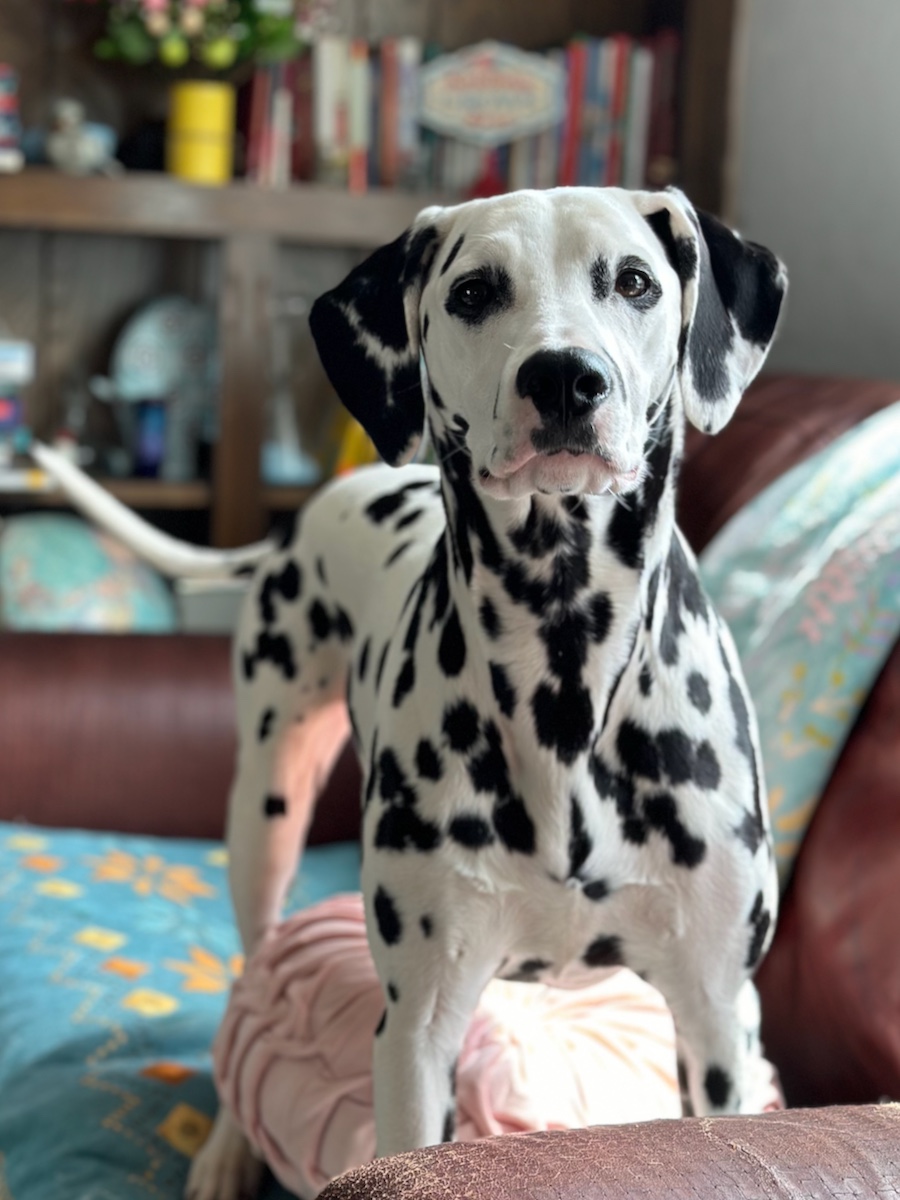
Everest, the Husky
“My husband really likes Huskies as a breed and was like maybe we should get one. And I said, ‘OK, but it’s Oklahoma; I don’t want to bring a dog here,’” said Grimm.
Her concern was that the Oklahoma heat could be taxing to a dog bred for cooler climates. Everest, however, was an Oklahoma native. She lived in an apartment and suffered from food, dog and guarding aggressions. The apartment was at least her second home.
“We just wanted to make sure that she felt safe and that she could be around other dogs, so we started working with her, trying to get her energy out,” said Grimm. “She got a backyard and was able to go in and out the doggy door whenever she wanted.”
Everest needed more than space to become the dog she is today; she needed time to adjust and “some extra love,” said Grimm.
“So I just started paying attention to her. What does she want? What might she be needing from me?”
One of the first traits Grimm noticed was how and where Everest guarded her space. She’s most comfortable eating in her kennel, so that’s where she gets her meals.
“Some people think that makes food aggression worse, but I think if you’re diligent about it and feed them at a regular time and don’t leave any food in their bed, then it won’t be a problem,” Grimm said.
Everest’s habits have trained Grimm and her family members to be careful with certain items.
“She really likes to eat trash, unfortunately,” Grimm admitted. “And electronics — she likes to chew remote controls specifically.”
She’s consumed articles of clothing, torn up shoes, and digested paper and cigars that resulted in removal services from a veterinarian.
“There were a couple of times where we considered trying to rehome her, but I just couldn’t,” Grimm said.
She reminds her family members that Everest doesn’t intend harm; she’s a sweet creature who craves space and understanding.
“She needs somebody that’s going to be there for her,” Grimm said. “I find meaning in taking care of her unique quirks because they don’t clash too hard with my own. Her sweet nature makes up for all of it, and we’re OK.”
Eloise, the Dalmatian
Eloise joined the family in 2020 as a puppy. Jacob, Grimm’s husband, knew of Grimm’s love for Dalmatians and surprised her by placing their name on a waitlist for an arriving litter. Once the puppies were born, Grimm studied the photos to pick out her perfect pal.
“My heart knew when I saw her little face. I was like, it’s got to be that one,” Grimm said.
Her intuition proved promising. Eloise is kind by nature. She’s very loyal to Grimm but accepts the household as her pack. When she hears the first car pull into the driveway, she’ll wait by the door until every car, person and pet is home.
“If everyone’s home, she’ll come right back in,” Grimm said. “But if she realizes someone isn’t home yet, she’ll stay outside until I call her back in.”
If Eloise senses that something is amiss, she’ll alert Grimm.
“I knew something was wrong this morning because Eloise kept pestering me; she kept nudging my arm. I couldn’t figure out what was going on and then later in the front room, I realized Everest brought a dead bird into the house. She’s a tattletale in that way, I guess.”
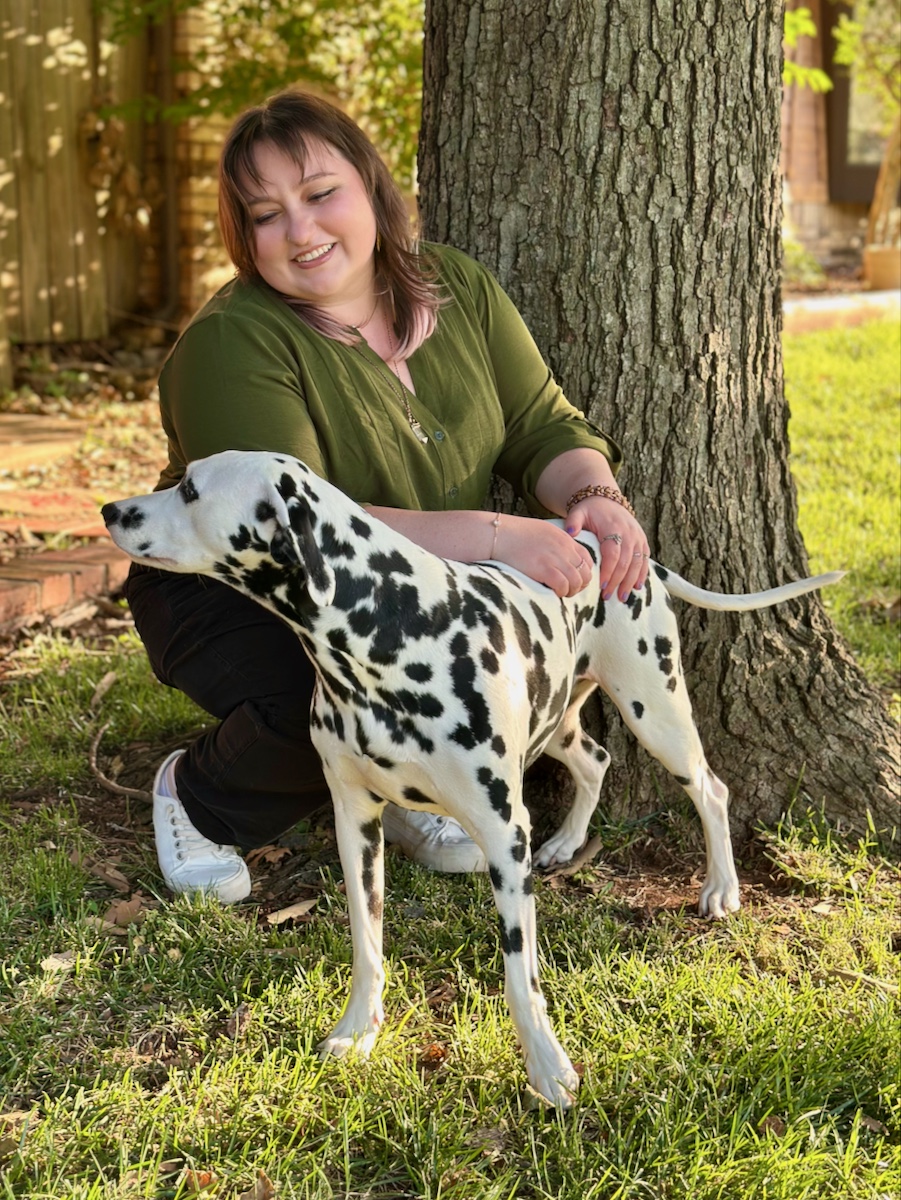
Eloise’s alerts aren’t always meant to get her furry sister in trouble. She helps Grimm in a very special, unexpected way.
“I have some struggles from my past and am diagnosed with PTSD. So every once in a while, I’ll have a panic attack that will take over my whole body, and I can’t do anything about it,” Grimm explains.
Eloise — who is not trained as a therapy or medical alert dog — will stop Grimm from potentially hurting herself. She recognizes when Grimm becomes tense and has stepped in, preventing Grimm from flailing or slamming her fists into hard surfaces.
“She’ll also sit on me,” Grimm said. “She loves to give hugs to calm things down.”
Grimm didn’t train Eloise to disrupt her panic attacks — or to alert her when papers go missing or a bird ends up in the house. She’s not sure why Eloise is so gently tuned in to those kinds of things. Maybe it’s the time they spent playing fetch during the COVID lockdown. Maybe it’s the loyalty typical of the breed. Or maybe it’s the same patience Grimm shows in caring for her high-maintenance dogs.
“I always listen to what they’re telling me,” Grimm said. “Whatever they do, they make my bad days bearable, and I’m glad I get to share joys with them too.”