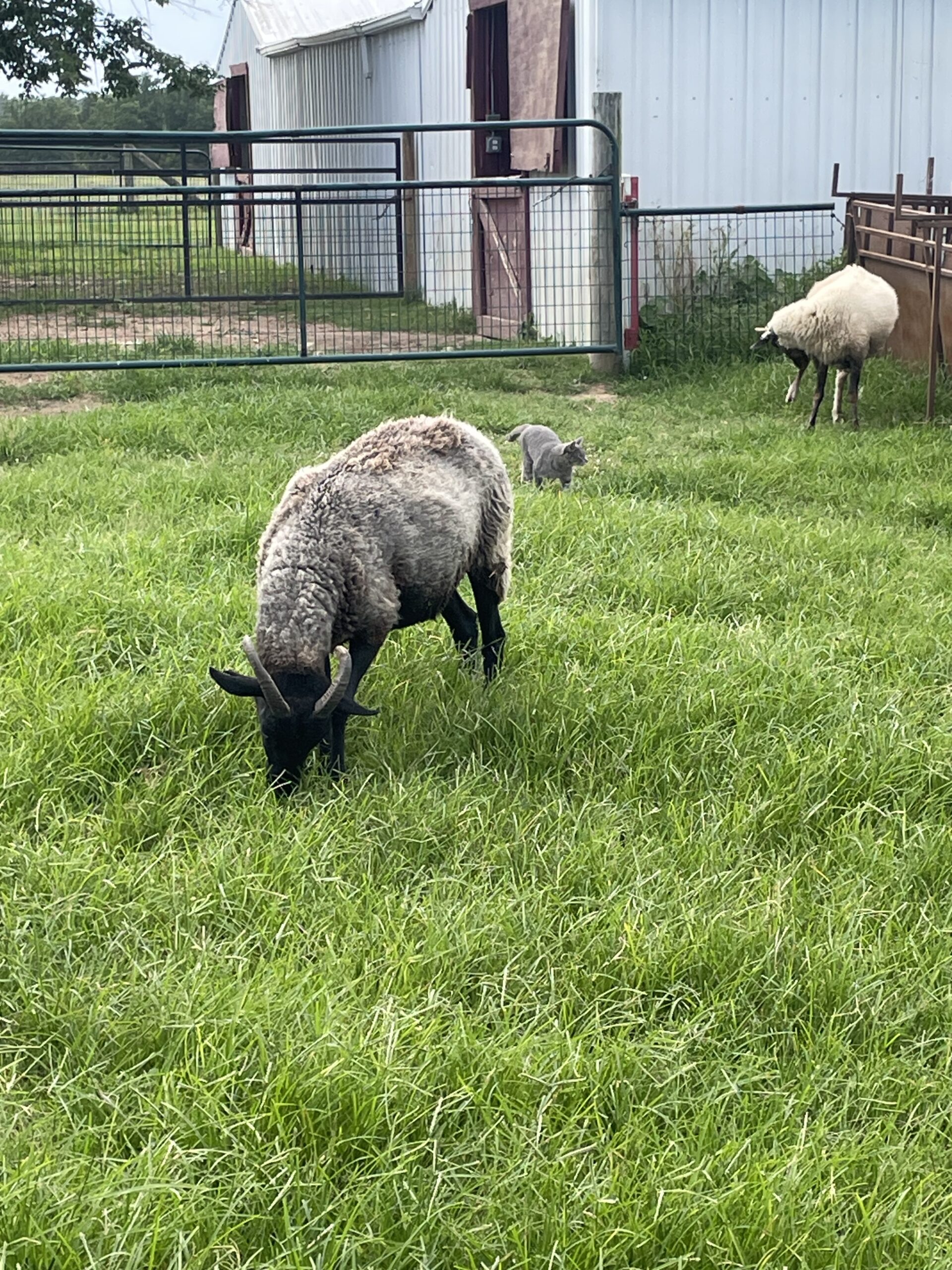
Dreaming of backyard farming? Chickens are often the easiest place to begin. We break down city ordinances in Tulsa and Oklahoma City and explore why backyard flocks are a popular gateway into urban homesteading.
by Julie Wenger Watson
Photos by Shawna Gehres
For a growing number of Oklahomans, raising livestock is no longer a purely rural pursuit. Urban farming is bridging the gap between city living and the benefits of fresh, local meat, dairy and eggs. As city ordinances change to accommodate the expanding interest in urban agriculture, residents are making room for chickens, quail and even a cow or two right alongside their dogs and cats.
Don’t run afoul (afowl?) of the law
Before you decide to try your hand at urban farming, get familiar with your city’s ordinances. Animal regulations vary greatly according to zoning and city codes, and there are specifications on how and where you keep your animals. Remember that even if you’re in compliance with your city’s requirements, Homeowners Associations (HOAs) may have more restrictive policies prohibiting or limiting livestock of any kind.
Title 2, Chapter 2 of the Tulsa Revised Ordinances regulates agricultural animals within the Tulsa city limits. Generally speaking, if you live in an area zoned “Residential,” you can keep chickens (six adults and 14 chicks under the age of eight weeks). While roosters aren’t explicitly banned from backyards, from a practical standpoint, their frequent, raucous “cock-a-doodle-doos” are prone to violating noise ordinances, making them an unwelcome neighbor. For the more adventurous city farmer, rabbits (up to six adults and 14 “kits,” or young, under the age of eight weeks) are also allowed.
In 2019, Tulsa added a new “Agricultural-Residential” zoning designation that primarily applies to areas of the city that are located on the outer edge. If you live in these areas, you’re allowed to have a greater number of chickens and rabbits, as well as a horse (under certain circumstances).
Oklahoma City residents with property under one acre have a bit more leeway with their backyard flocks. Both chickens and quail (up to six total) are allowed, according to Article IX Section 59-9350.7.1 of the Oklahoma City Code, but roosters are forbidden. With one to five acres, an entire world of ranching opens up, including that beautiful pet Highland cow you’ve dreamed of, along with pigs, horses, donkeys or sheep.
The benefits of backyard livestock?
While it definitely takes work, there are countless benefits to keeping even a small number of farm animals in an urban setting. Raising your own food, whether it’s vegetables, eggs or even meat, can be extremely satisfying. Not only does it give you a sense of self-sufficiency, if you have children, it’s also a wonderful opportunity for hands-on education about animals, the environment and food production. Livestock can be a fascinating alternative to traditional family pets, providing companionship and entertainment while fostering responsibility and independence.
As an actual food source, your homegrown products are often more nutritious and tastier than what the store offers, and you have control of the conditions under which your animals are raised. You can choose to go organic or offer your animals a higher quality of life in a more natural environment than is often found in modern industrial farming. In addition, raising your own animals is an opportunity to be a good steward of the land and its creatures.
Shake your tail feathers
Maybe you’re ready to try your hand at backyard animal husbandry, but you don’t know where to start. For many city dwellers, poultry are the gateway to urban farming. If you’ve ever tasted a fresh egg, you know that store-bought doesn’t compare. The bright orange yolk, thick, firm whites and rich flavor of a just-laid egg are worlds apart from the uniform white ovoids found on most supermarket shelves. Raising and maintaining a small flock of chickens is relatively easy, and the return is high.
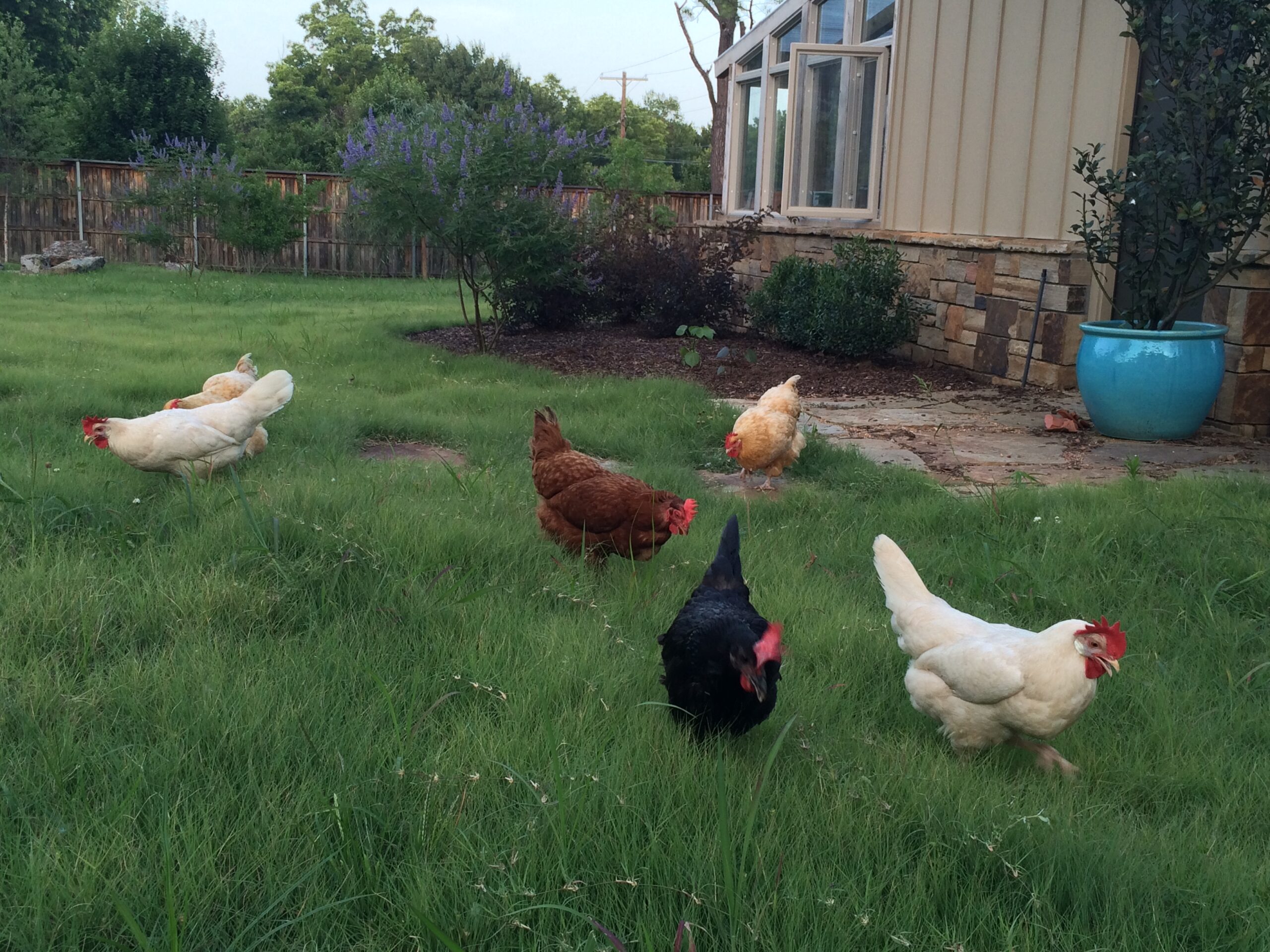
Tulsan Shawna Gehres was first inspired to eat more locally produced food after reading Barbara Kingsolver’s 2007 book “Animal, Vegetable, Miracle: A Year of Food Life.” The following year, Gehres began raising chickens in her Midtown backyard, and she’s continued her poultry pursuits ever since.
“It seemed so radical and edgy when I first learned about a friend’s flock and started thinking about getting our own hens,” she recalls. “In truth, people have been keeping small household flocks for thousands of years, and it’s really not a big deal. What’s radical is the way our society treats the vast majority of chickens who are raised in unspeakable conditions in industrial farms.”
Gehres loves the fresh eggs and the knowledge that her chickens are living a good life, but she also enjoys the hens themselves.
“They’re really sweet and easy to care for. We have now moved — oh, moving them was a challenge; we used dog crates in the back of our SUV — to a home with a much larger yard, and we mostly let them free-range in the backyard during the day. I love to see them roaming in the backyard, and I recently told guests at a dinner party that the job of the chickens was to look bucolic for our guests. When we walk outside, they flock to us, and they obediently follow us into the coop when it’s time to lock them up for their safety through the night.”
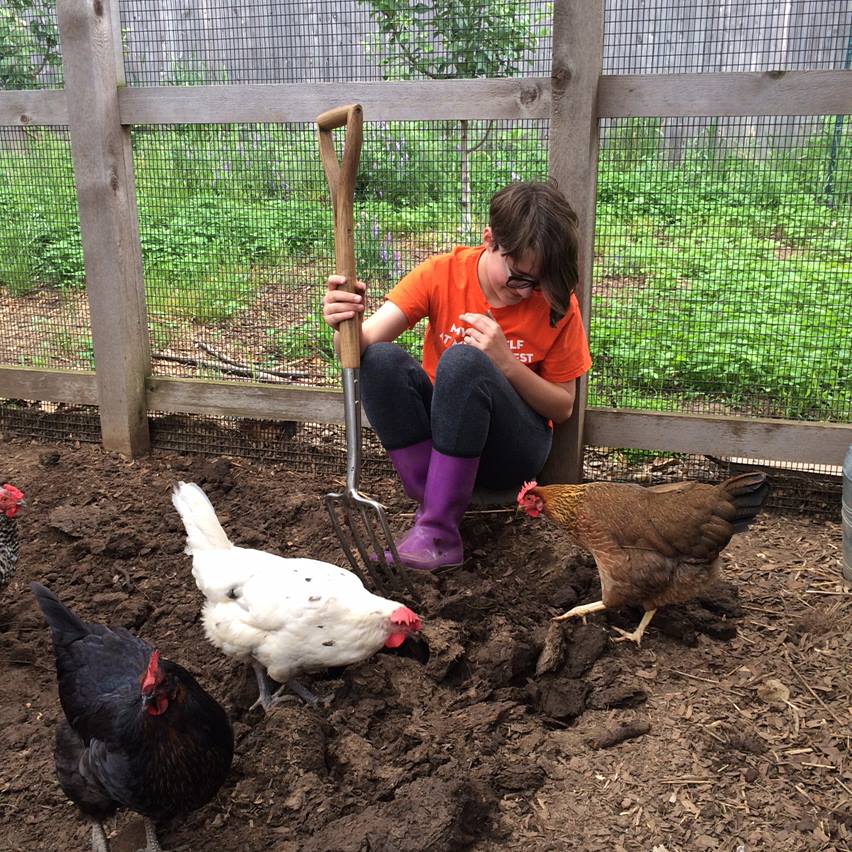
For Gehres, the biggest challenge of keeping chickens is accepting what she calls “the circle of life.”
“Chickens die all the time for all sorts of reasons, including the heat, disease, predators and once even at the hands (paws? jaws?) of our Labrador Retriever, Abby. I have lost count of how many chickens we have had over the past almost 18 years,” she says.
She encourages anyone interested to start their own flock.
“They’re great. There is some upfront expense of making sure you have a place safe from predators, but after that, they are very easy.”
COMING NEXT ISSUE
Beyond the coop, we explore how residents are embracing the growing urban farming movement.