In each issue this year, meet a local foster parent and discover why they open their home and heart to pets in need.
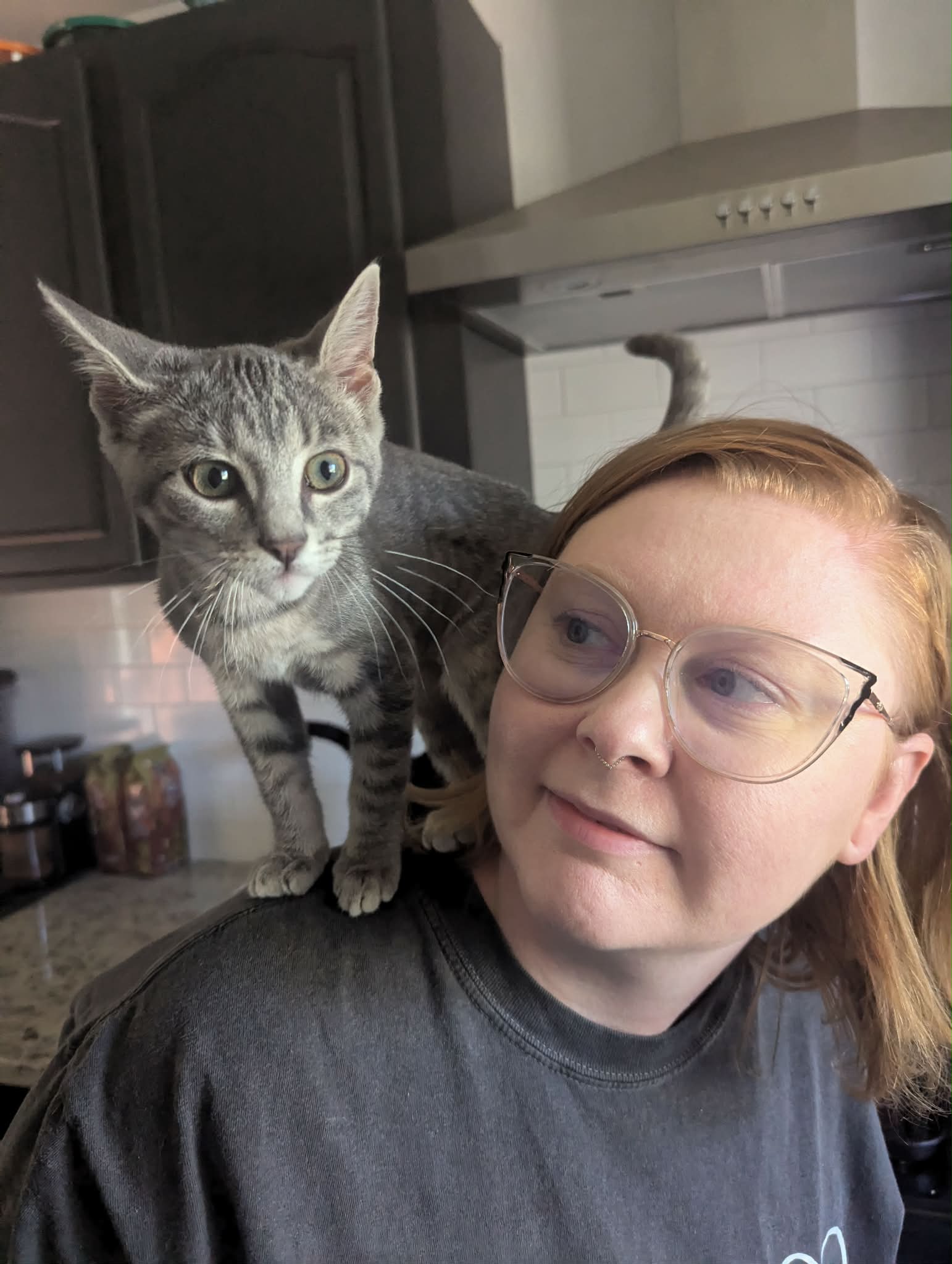
Amy Cerda’s home is rarely quiet. She and her husband share it with seven rescue cats, one rescue dog and a constant flow of foster animals. A volunteer program coordinator at Science Museum Oklahoma and former animal welfare professional, Cerda has fostered more than 50 animals, many with medical needs.
by Amy Cerda
I actually got into fostering by chance. I met the directors of Kanoa Rescue Foundation at a local pet food store, and they mentioned they were looking for cat fosters. Around that same time, I had adopted a tripod cat from All Paws Rescue. Caring for her opened my heart even more to cats with special needs. I decided to sign up as a foster, and that one decision completely changed my life.
Through Kanoa Rescue Foundation, I met experienced foster families who taught me about the pet overpopulation crisis in Oklahoma and how important foster homes are. As I learned more, I discovered I have a soft spot for cats that are injured, recovering or might otherwise be overlooked.
Knowing that one open space in my home creates another open kennel in a shelter is incredibly motivating. Every foster animal that comes into my home represents another life that can be saved.
Fostering has also helped me see the importance of addressing pet overpopulation at its source. Oklahoma has a tremendous number of community cats, and I believe trap-neuter-return (TNR) is one of the most effective and humane ways to reduce the number of kittens born on the streets. Every cat that is spayed or neutered through TNR helps prevent future litters that would otherwise end up in shelters or struggle to survive outdoors.
A ‘foster fail’ win
I still love receiving updates from adopters and seeing the wonderful lives so many of my former fosters are living. If I had to choose a most memorable foster, it would be a cat who unexpectedly became one of my “foster fails.” She came into rescue after her owner fled a domestic violence situation. Once her family was in a safe place, they were able to bring her home, and I was so happy they could be reunited.
But after some time, her family faced financial hardships and could no longer afford the medical care she needed. When I got the call that she had been surrendered, I was heartbroken for them because I knew how much they loved her. At the same time, I also knew she would always have a home with me. She settled right back in as if she’d never left, and today she’s one of my own cats. We absolutely adore each other, and every time I look at her, I’m reminded that fostering isn’t just about helping animals; it’s also about helping people through some of the most difficult moments of their lives.
Rewards and challenges
Many people assume the hardest part of fostering is saying goodbye, but for me, it isn’t. Seeing an animal find a loving forever home is actually one of the most rewarding parts of the journey. The hardest part is when you lose one. Whether it’s an animal that passes away while in my care despite everyone’s best efforts or learning years later that one of my former fosters has crossed the rainbow bridge — those losses stay with me. Every foster becomes part of your story, and you never stop caring about them.
The most rewarding part is receiving adoption updates. Knowing they are living happy lives with their forever families makes it all worth it.
Advice for potential fosters
You don’t have to be an expert to foster, and you don’t have to wait until you feel completely ready. We all start somewhere. Many of us began fostering with questions, uncertainty and a lot to learn along the way. One of the things I love about the animal rescue community in Oklahoma City is how supportive the foster community is.
There are so many experienced fosters who are willing to answer questions, share advice and help new fosters feel confident. Fostering is not just for people who want to adopt or who have years of animal experience. It’s for people who are willing to open their homes, learn and give an animal a safe place to land.
Vital support
Most shelters and rescues provide medical care, vaccines, spay/neuter services, medications and guidance throughout the fostering process. Foster families are never expected to do it alone.
A change of perspective
Watching foster transformations has been one of the greatest privileges of my life. Fostering has also introduced me to an incredible community of compassionate people who share the same mission of helping animals. In fact, if I hadn’t become involved in animal welfare, I never would have met my amazing, supportive, animal-loving husband.
Together, we’ve opened our home to countless foster animals, and I truly can’t imagine what my life would look like without this journey. Fostering hasn’t just changed the lives of the animals we’ve cared for, it has shaped my own life in ways I’ll always be grateful for.