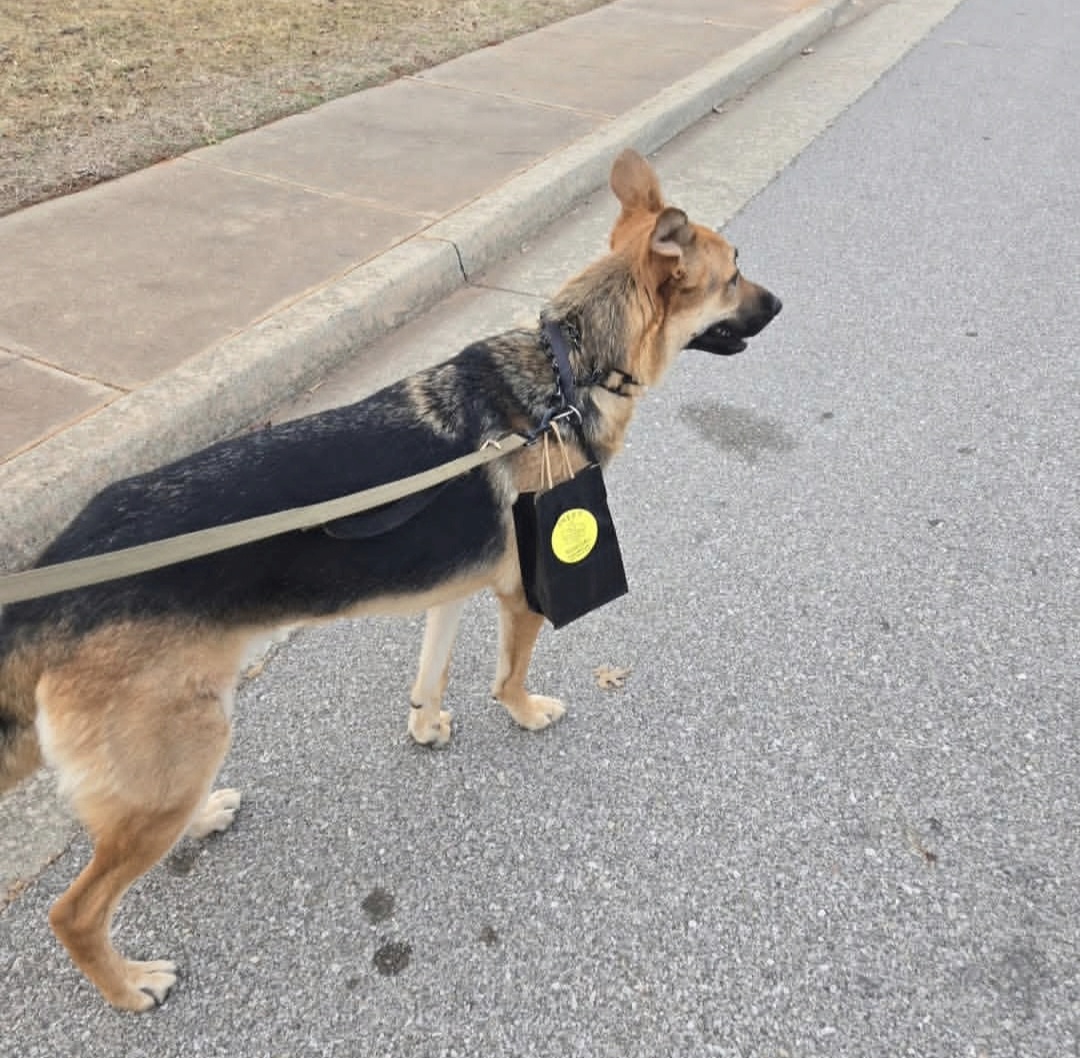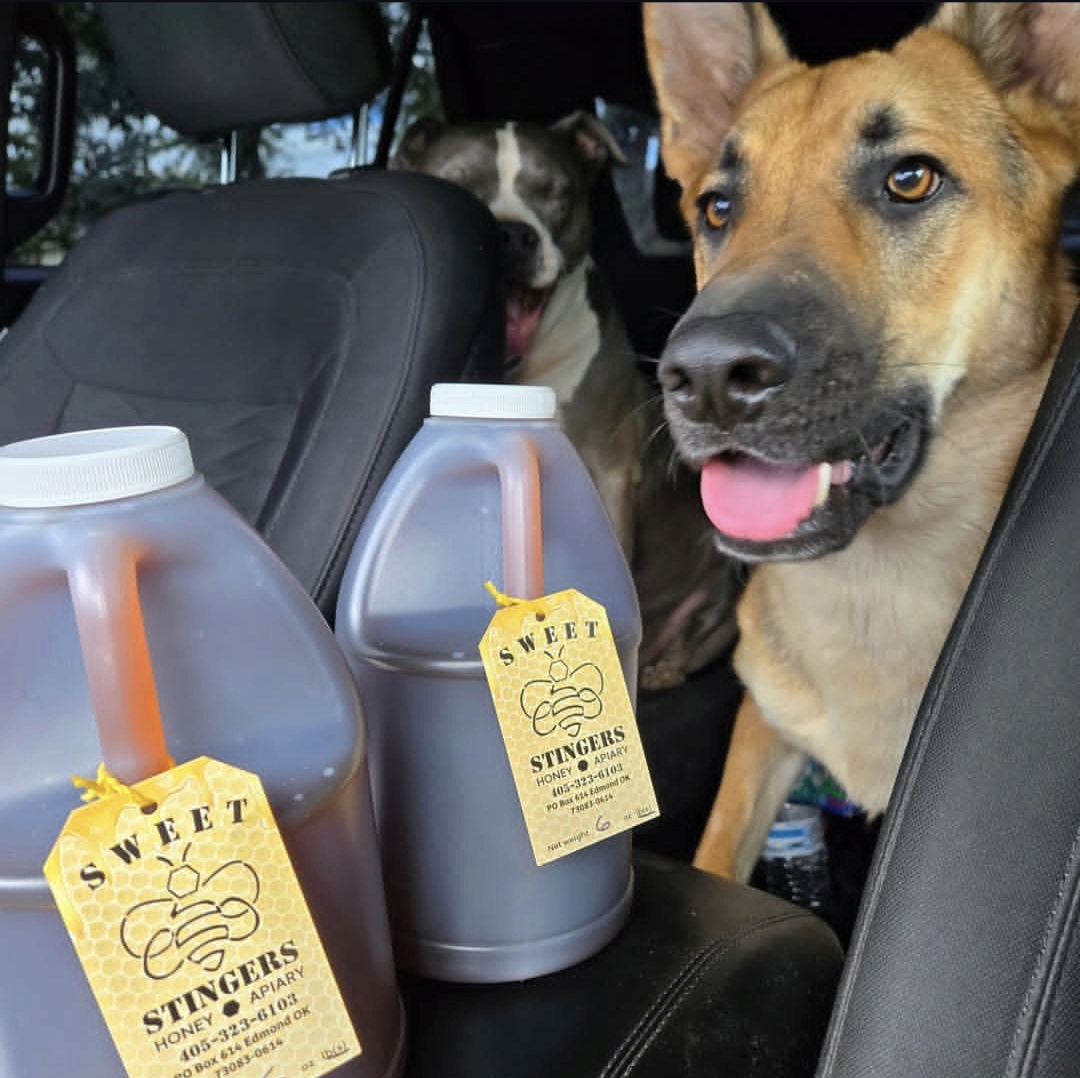
Some years ago, rescuers came across a Pit Bull wandering the streets one frigid February, underweight and suffering from frostbite.
Central Oklahoma residents Melissa and Justin Scott own Sweet Stingers Honey & Apiary, and their children Lexi and Lucas are integral to the business. The family adopted the dog.
“We named him Ace the Bee Dog,” says Justin. “He probably lived his previous life chained up outside. He was our first dog that hung out in the bee yards and watched us. It became his thing.”
These days, Ace is one of the Scotts’ four rescue dogs, and they are all living cushy lives inside the family’s home. Big snugglers, the four sleep with family members. But they’re also officially known as the “Bee Dogs,” and they can be seen on sites where the family manages bee hives.
Justin says the other three dogs are German Shepherds, including Maverick, who was tossed from a car as a puppy and suffered broken legs before the Scotts adopted him.
“Maverick honks the car horn if he is left in the bee truck,” Justin adds, “and people laugh when they hear it.”
An owner surrender, Goose is 3 years old. “He is a goofball, crazy smart and a fast learner,” says Justin. “He can open his kennel, the back gate, doors and the garage. He taught Maverick that gates or barriers are not meant for them. They can jump over or climb them. If it is too quiet for too long, you can bet the dogs are up to something, and Goose is leading the way.”
The Scotts found their fourth dog, Wonder, at a bee yard. “She was sick and very malnourished,” Justin says of the 3-year-old dog. “She likes to give you her opinion and is very nurturing.”
Now with their four Bee Dogs in tow, the Scotts stay busy. Melissa teaches school, while Justin has spent more than three decades building a strong track record for keeping honey bees alive. He travels roughly 80,000 miles each year to oversee Sweet Stingers’ three-tier business model across Texas and 57 Oklahoma counties.
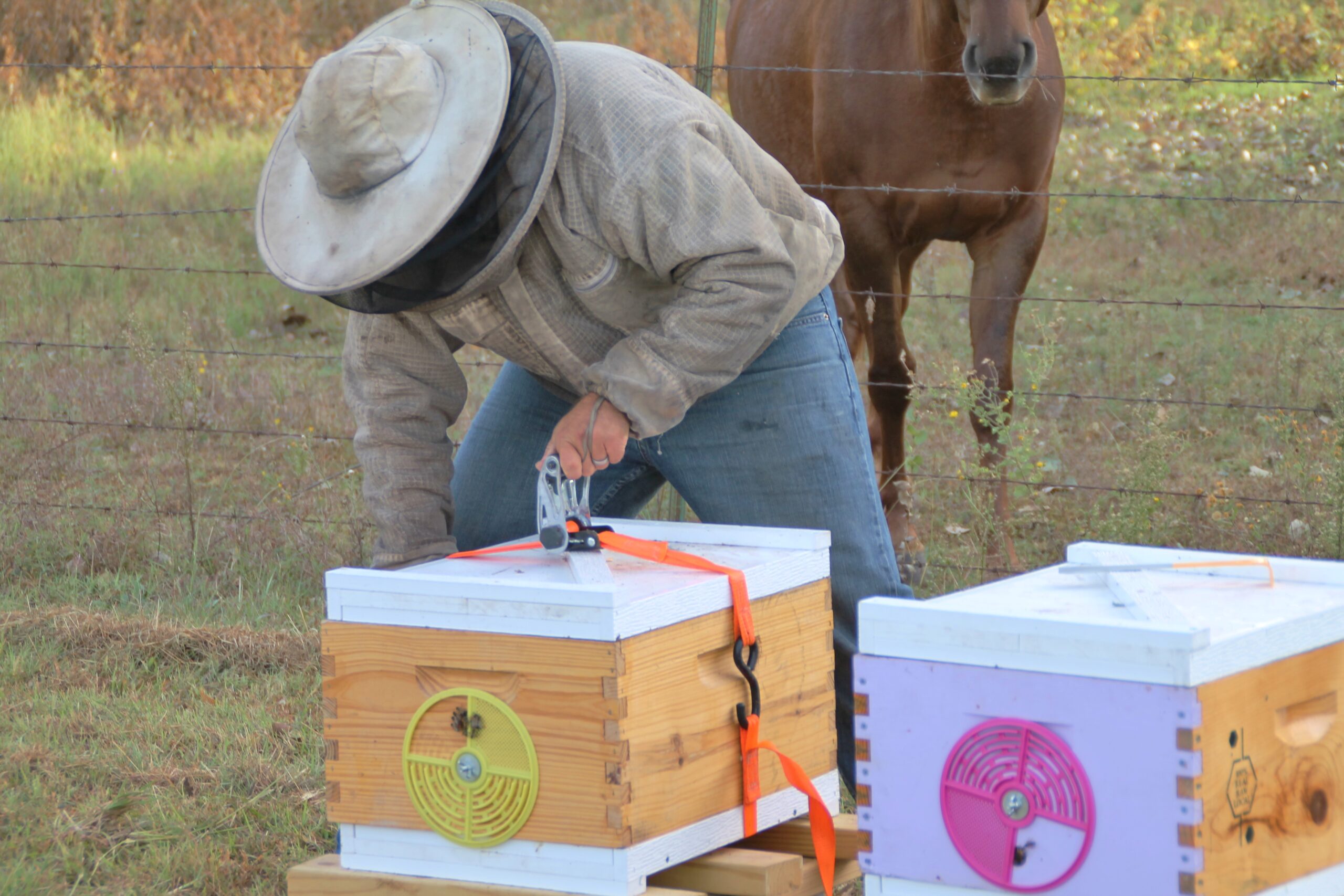
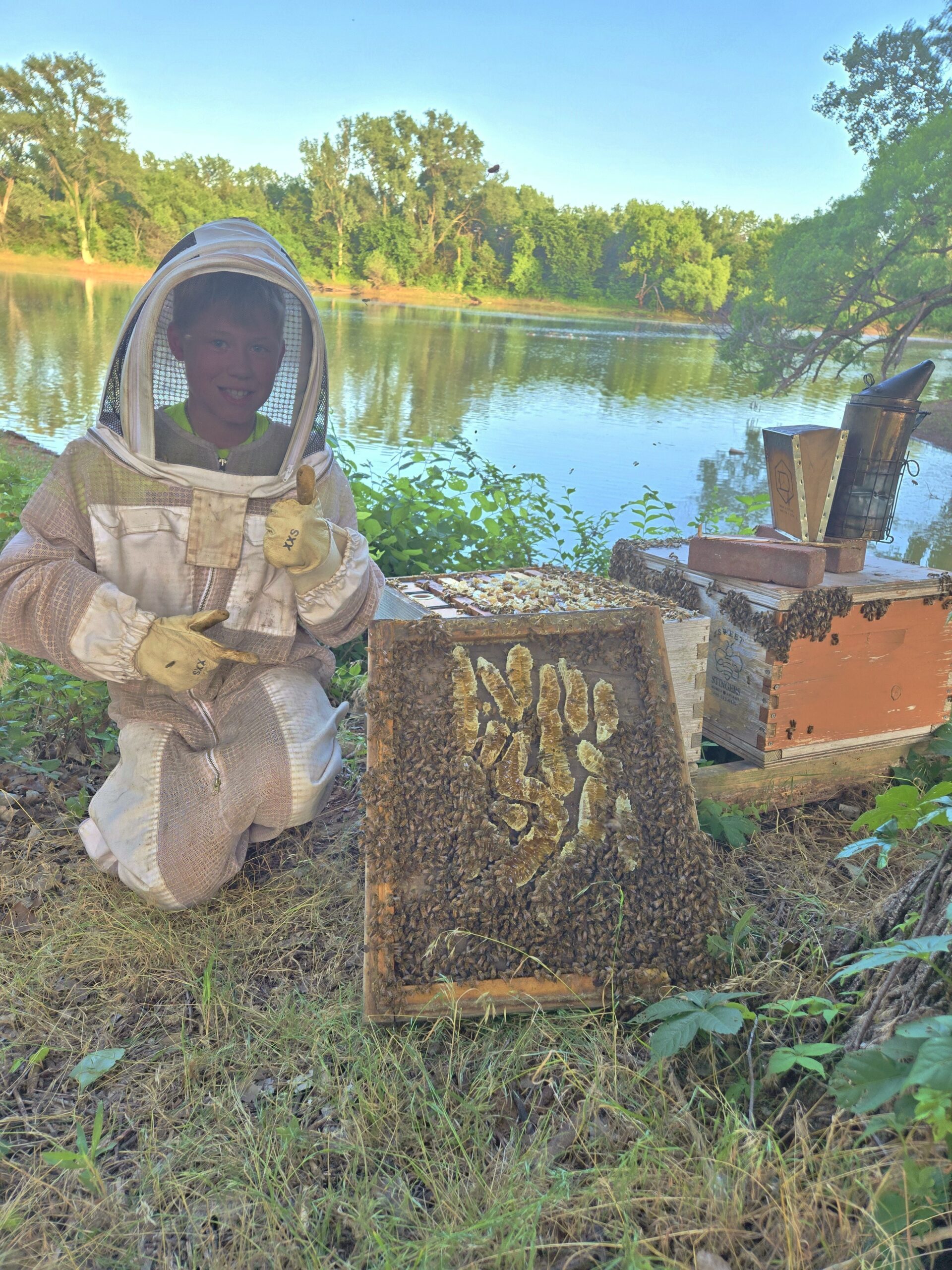
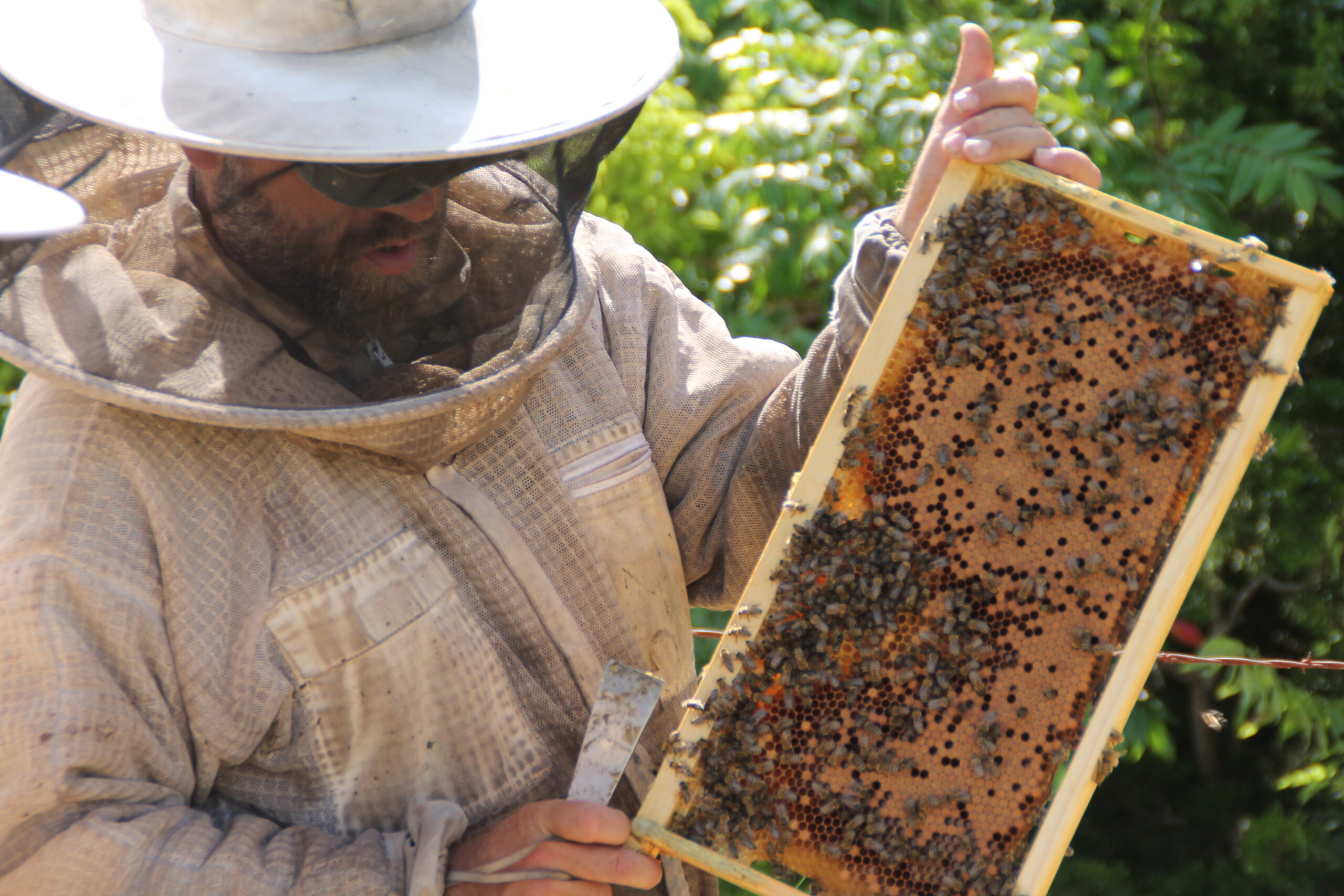
Tier one involves the Scotts setting up hives at approximately 180 locations, managing roughly 800 hives in backyards, on farms and ranches, and on commercial properties, then maintaining the colonies and extracting honey for the owners. Those include hotel and restaurant rooftops. They’ve even worked with chefs, putting hives on their restaurants so they can offer local honey on their menus.
“The biggest difference between us and other beekeepers is we are a service,” says Justin. “We do something different, and we do it very well. Property owners pay for hive management. We manage the colonies for a fee, and they can obtain their honey in return. We can even set up for other things from the hive, like comb honey, pollen, propolis and beeswax. We do the work. The property owners never have to lift a box or work with bees.”
Most people want bees to pollinate their garden or for honey. Others simply want to help support the bee population. Unfortunately, about 80% of beekeepers get bee hives and kill their bees. So the Scotts’ second tier is educational, focusing on bees and pollinators in general. At least 50,000 followers across social media watch their “Lessons from the Beehive,” a weekday series that explains beekeeping, shares honey recipes, highlights flowers that attract pollinators, and shows how people can help bees.
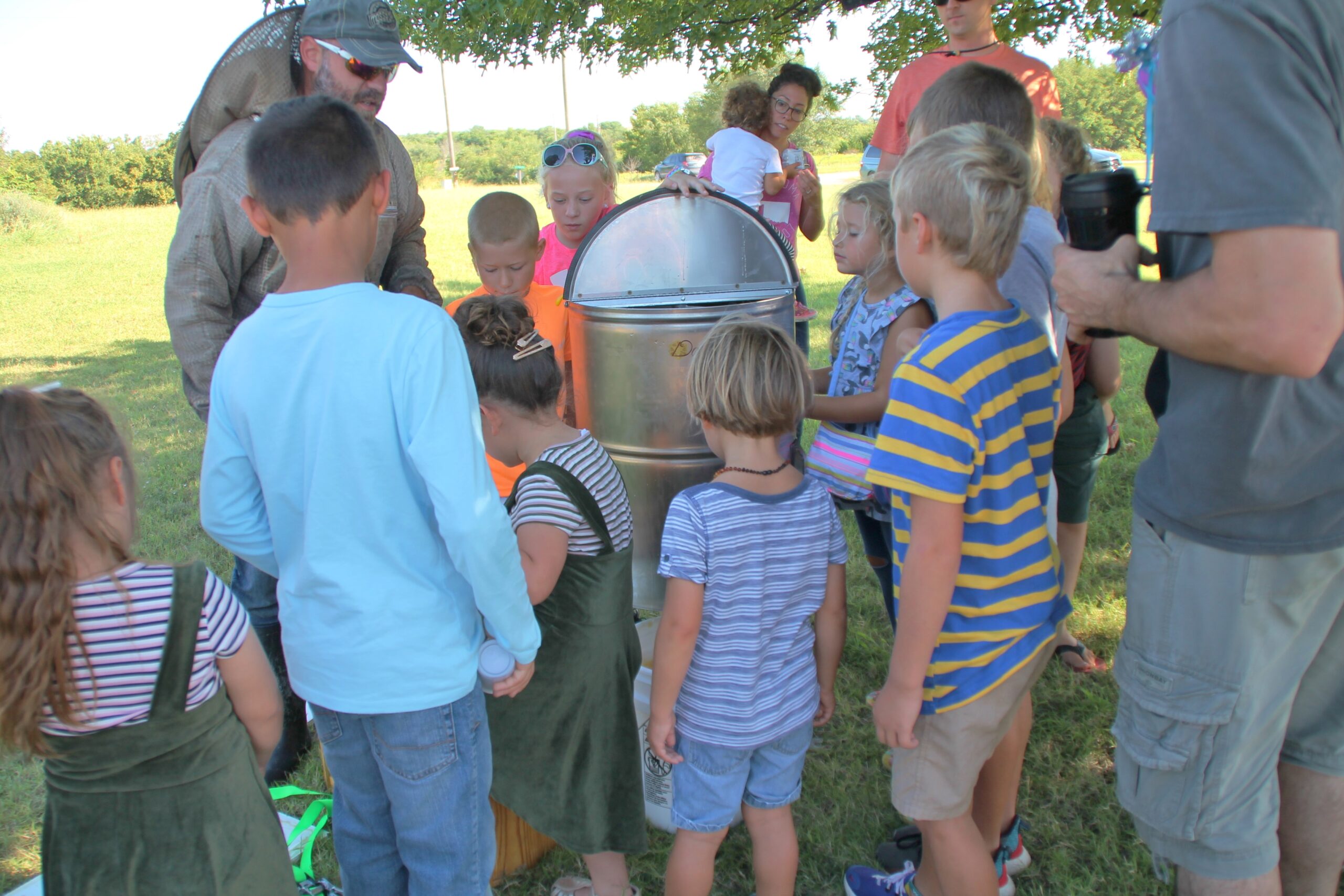
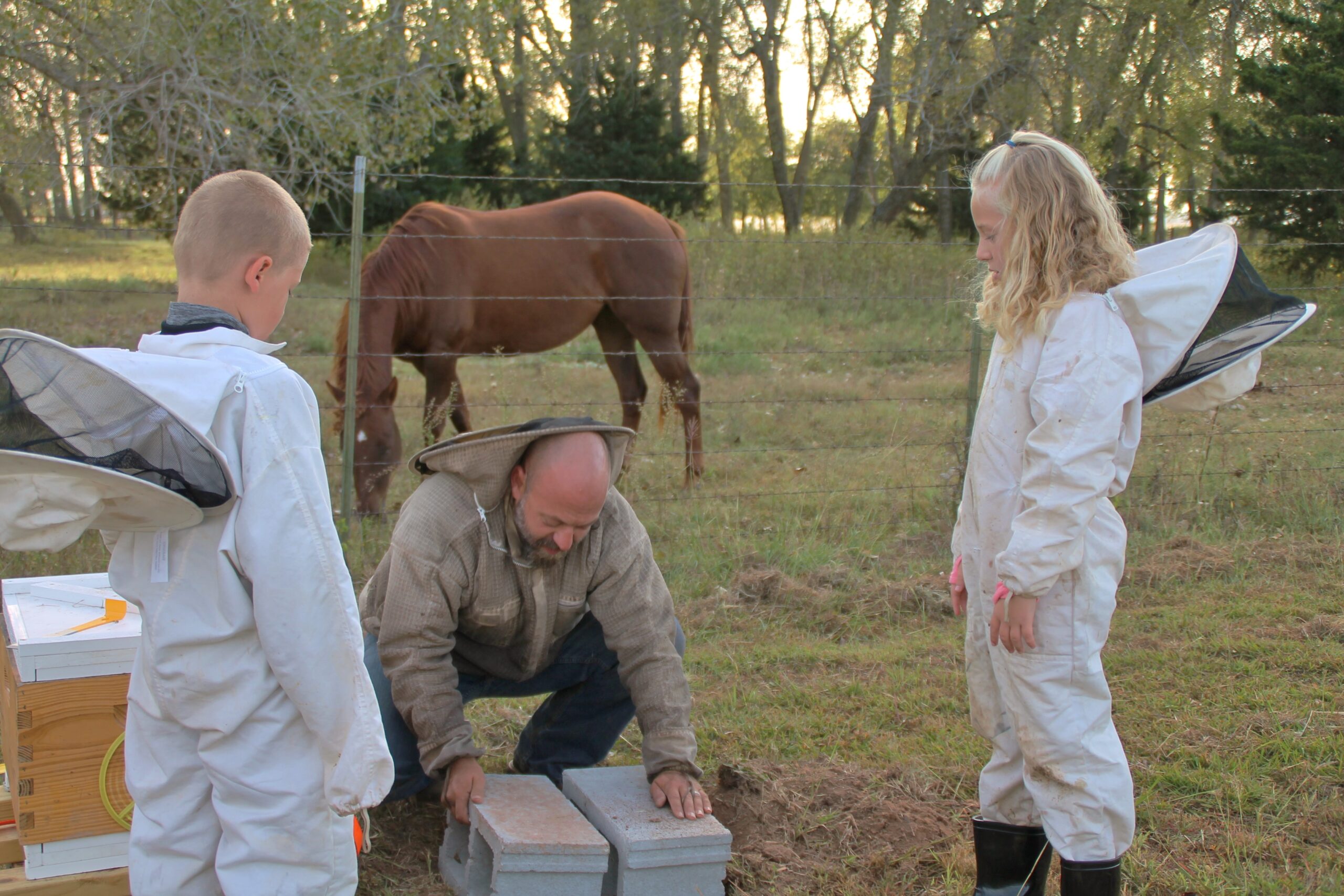
The family also teaches at Guthrie’s Meridian Technology Center and travels to share their bee expertise with public, private and home-school classes, scouting groups, homesteading communities, Kiwanis and conferences. They even offer the chance to suit up and go through live hives.
“Also, we travel with an acrylic beehive — a fully functional beehive — that people can see inside,” says Justin. “We take it to farmers markets and events.”
Years ago, an onslaught of health issues caused the Scotts to remove sugar from their home menus. So they’ve spent years learning how to use honey instead. “We cook with honey, and we show the public how to make pies, jams, jellies, breads and other things with honey,” says Justin.
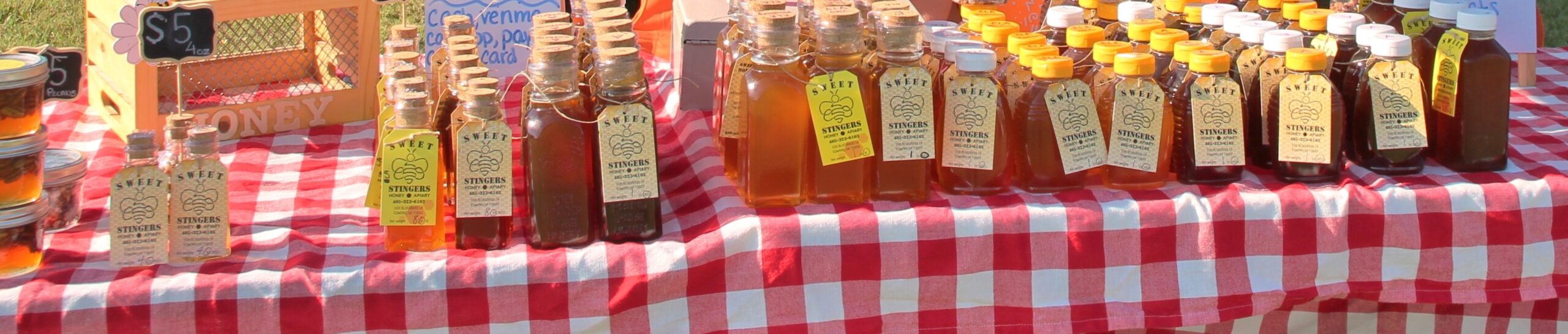
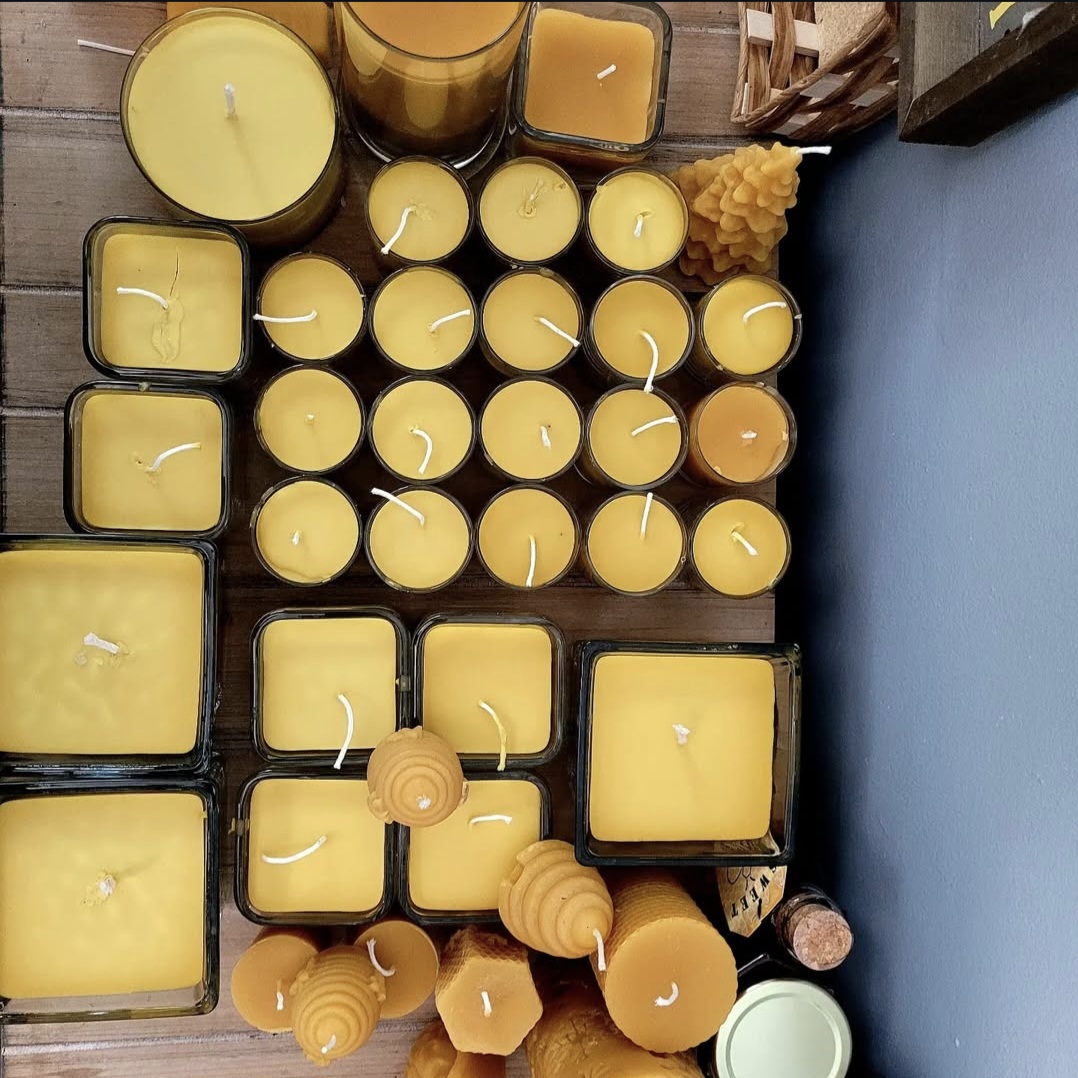
Their third tier involves selling pesticide-free, hyper-local honey. They never mix honeys from different hive locations or areas. Plus, they produce creamed honeys, numerous infused honeys, candles and more.
These days, their children, 14-year-old Lexi and 12-year-old Lucas, help with the business. Lexi works on products and is developing a new soap line, while Lucas assists in the bee yards, builds equipment, works markets and is crafting woodworking items.
The now wildly popular Bee Dogs are always with the family. Sweet Stingers can be found year-round every Saturday at Edmond Farmer’s Market, online on Facebook, Instagram and YouTube, and at other markets and events. They deliver orders to doorsteps and stock their products in retail venues.