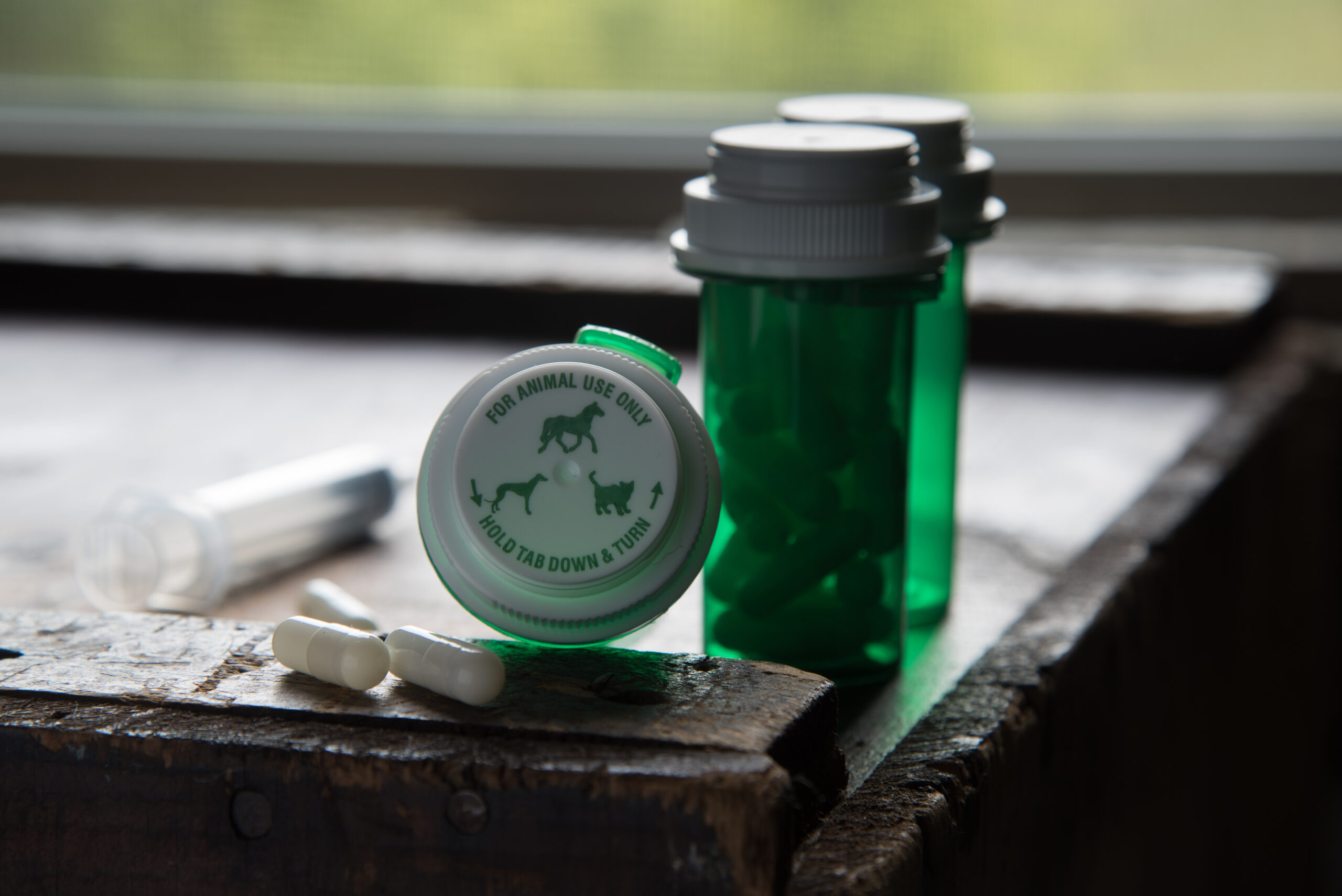
by Kyle T. Panter, PharmD, Innovative Pharmacy Solutions
Veterinarians have one of the most challenging jobs in medicine. Their patients cannot describe what hurts, how long it has been bothering them or how severe the pain might be. Some even resist examination altogether. Yet day after day, veterinarians remain dedicated to diagnosing, treating and nursing their patients back to health. Complicating matters further, many of the medications they require are not compatible with their patients’ needs. That is where a compounding pharmacy can make a critical difference.
What’s a compounding pharmacy, and what does a compounding pharmacist do?
It’s a very common question — one I get all the time. Simply stated, compounding is the blending of two or more ingredients into a single dosage form. It harkens back to the early days of pharmacy — thousands of years ago — whereby medications were hand prepared by a local pharmacist to fulfill the intended purpose of a physician.
Believe it or not, compounding was the norm in America until the mid-50s when drug manufacturers entered the scene. Since that time, compounding has slowly dwindled, but it is making a resurgence.
Why would a person or a pet need a compounded medication?
Many patients have unique health needs which cannot be adequately met by manufactured medications. In the realm of pets, the exact dosage required is most likely not available from a manufactured medication.
For example, imagine a ferret and an elephant needing the same medication. Obviously, the ferret’s dose is going to be infinitely smaller than the elephant’s. Manufacturers do not account for such a wide range of doses when they make medications. Compounding pharmacists can make this medication for both the ferret and the elephant in the proper dosage they require.
Improved Compliance
Another reason pets need compounded medications is to improve compliance. In veterinary medicine, 75% of therapeutic failures occur because pets will not willingly take prescribed medications. This can be especially true if the pet’s regimen includes several medications taken multiple times per day.
For example, a dog with congestive heart failure may require three different medications, each given twice daily, to manage the condition. In many cases, compounding pharmacists can combine multiple medications into a single dosage form to make the process of medicating a pet easier and more successful. So in the case of our canine friend, what would have taken six medication encounters each day could be reduced to two.
Tasty Meds
Other advantages of compounding include taste. Animals have unique diets and taste preferences which manufacturers often overlook. Compounders can make medications in a flavor that would be desirable to your pet. Compounders can also change the dosage form into one that would be easier to administer. If a drug is extremely bitter, a compounding pharmacist can turn it into a topical form that can be applied to the inner, hairless part of your pet’s ear, allowing absorption without forcing your pet to take it by mouth.
These customized solutions make giving medication easier and less stressful for both you and your pet.