by Audrey Graumann
Photos courtesy of OSU College of Veterinary Medicine
Pets are part of the family for millions of Americans. But when tragedy strikes and an owner can no longer care for their animal, who steps in? For over 25 years, the Cohn Pet Care Facility at Oklahoma State University has provided that lifeline.
The facility opened in 1998 thanks to a generous donation from the estate of Leah Cohn Arendt, who wanted a secure home for her pets after her death. Originally designed to care only for her animals, the facility eventually expanded its services to the public, offering both short-term boarding and lifelong care for pets whose owners can no longer provide for them. Today, the facility carries her name and her legacy of compassion for animals.
Endowment participants can choose to permanently house their pets at the Cohn Pet Care Facility, or the staff will work to find the pets the perfect homes that match the requirements established when enrolling. Regardless of the decision, pets receive the highest standard of care from OSU College of Veterinary Medicine veterinarians and support staff.
The Cohn facility relies on two full-time and three part-time staff who care for the animals every day. The part-time staff members are students from the OSU College of Veterinary Medicine, and one even lives in an apartment connected to the facility to provide around-the-clock care.
Workers at the facility strive to provide the best care for each animal, said Shawn Suriano, manager of the Cohn Pet Care Facility and registered veterinary technician. As Suriano talked, her Pit Bull, Vitto, put his paws in her lap and calmly asked for attention — a small reflection of the comfort the facility provides to all its residents.
“It is my goal to love everyone’s pets while they are staying with us as if they were my own,” Suriano said. “Animal care isn’t hard for me.”
Suriano’s responsibilities range from daily animal care to managerial duties, including client relations and reviewing applications. Under her guidance, students gain hands-on experience, learning how to care for animals in a professional setting.
“To learn about animal behaviors is best [done] outside of [one’s] home,” Suriano said.
The Cohn facility provides boarding for both cats and dogs, charging $20 per day for each cat and $25 per day for each dog — though two dogs can share the same kennel. Students can also use the boarding services; those who do not have bursar holds can charge the boarding fee to their bursar. Currently, the dogs are boarded in every other kennel due to the K9 flu.
Permanent residents — animals living out their days at the Cohn facility — are known as legacy pets. Through an endowment fund, these animals are placed on a waiting list, and after their owners pass away, they come to the facility to live the rest of their lives.
While boarding and legacy care are the facility’s primary services, the staff also give back to the community by supporting Wings of Hope, a program for battered women. Cohn provides temporary care for these women’s pets while they are in need, ensuring both pets and owners are supported.
A typical day at the facility mirrors life in a pet-friendly household, with letting dogs out to their runs, followed by breakfast and any needed medications. When time allows, staff members do laundry and dishes. After the initial tasks of caring for the animals are done, the staff members check phone messages. At this time, they let the dogs out to their runs again as needed. Evenings include dinner and medication, and finally, preparations for the night ensure all the animals are safe and comfortable.
In her role, Suriano said the hardest part of the job comes when an animal dies. After caring for them day in and day out, the animals become like family, and the staff feel the loss just as deeply as if they were their own pets.
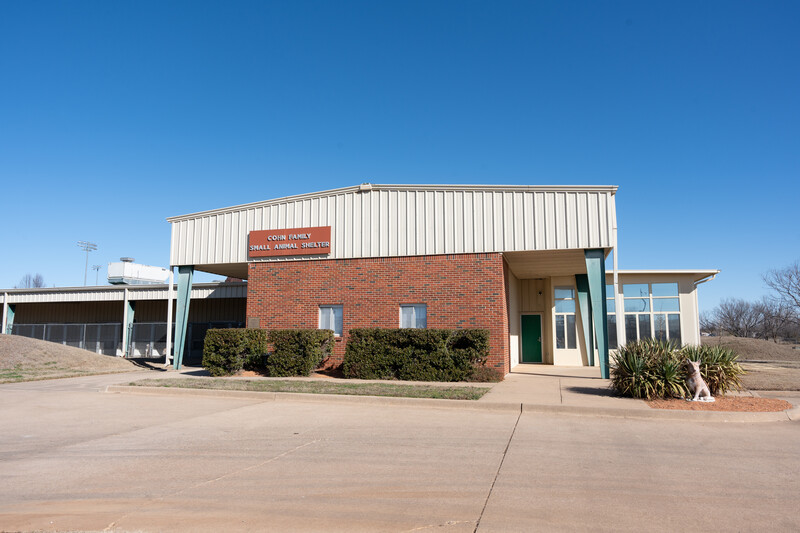
The 6,600-square-foot facility is located on eight acres of land north of the OSU Veterinary Medical Hospital and is designed to make the animals feel comfortable in a home-like environment. For canines, there are two primary rooms. Kennel A is the general kennel room, which typically has music playing, and Kennel B is the quiet room. Dogs in Kennel B have more seclusion, and this environment was created to keep the animals’ stress at a minimum.
“Our dogs here have outside runs,” Suriano said. “They don’t have that at [most] shelter[s].”
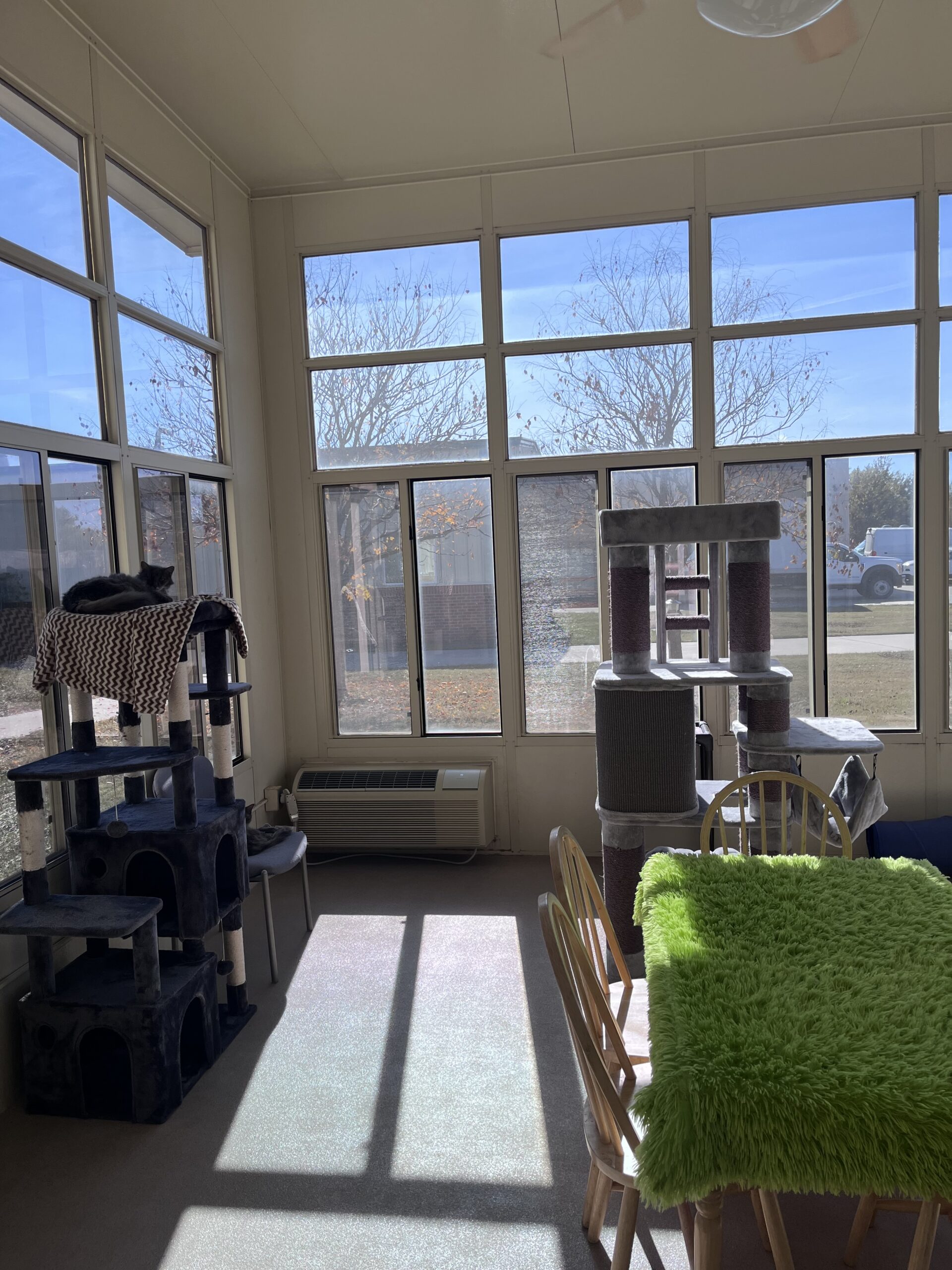
The boarding cats have just one kennel room since fewer cats board at the facility. Attached to the kennel room for cats is a sunroom where the endowment cats like to spend their time. Three walls of the room are mostly made of windows, allowing the sun to shine in the room at most hours of the day.
Suriano’s office is connected to the cat room, and she specifically designed it around feline comfort. A cat tree sits in the corner — a favorite spot of the cats. For further cat enrichment, a fish tank sits on her desk.
Suriano said future goals include updating and modernizing the existing facility with plans to expand. “We want to encompass all areas that we can to provide care for animals.”